
Adjustable dumbbells are usually the fastest way to make a home gym feel “complete” without turning your living room into a storage unit.
If you’ve ever priced out a full rack of fixed weights, you already know the pain: cost climbs quickly, and the footprint gets out of hand. A good adjustable set can cover a wide range of loads, keep workouts consistent, and make progressive overload (gradually increasing resistance) much easier to stick with.
This guide focuses on what actually matters when you buy: how the adjustment system behaves mid-workout, what weight range fits typical home training, what tends to break first, and how to choose based on your space and routine.
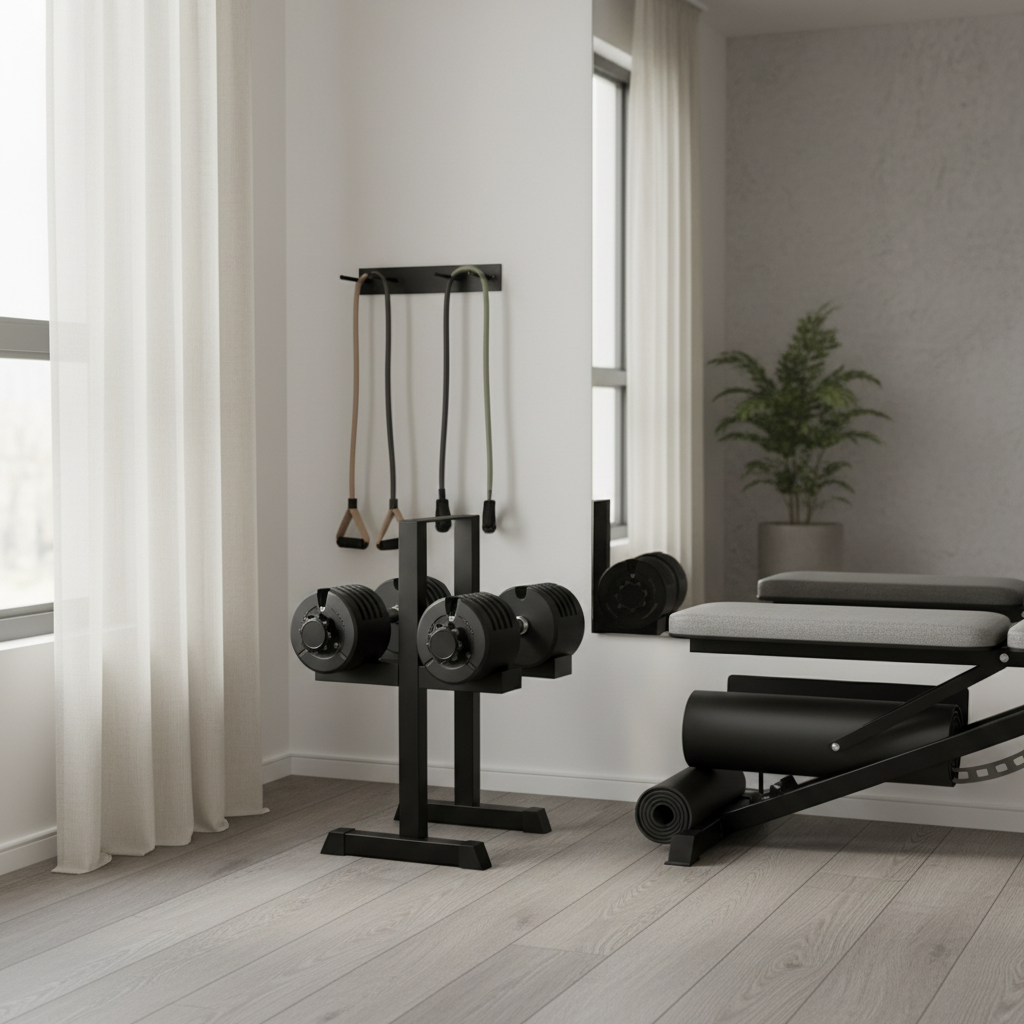
What makes adjustable dumbbells “good” for a home gym
On paper, many sets look similar. In practice, small design choices decide whether you love them or stop using them.
1) Adjustment speed and workout flow
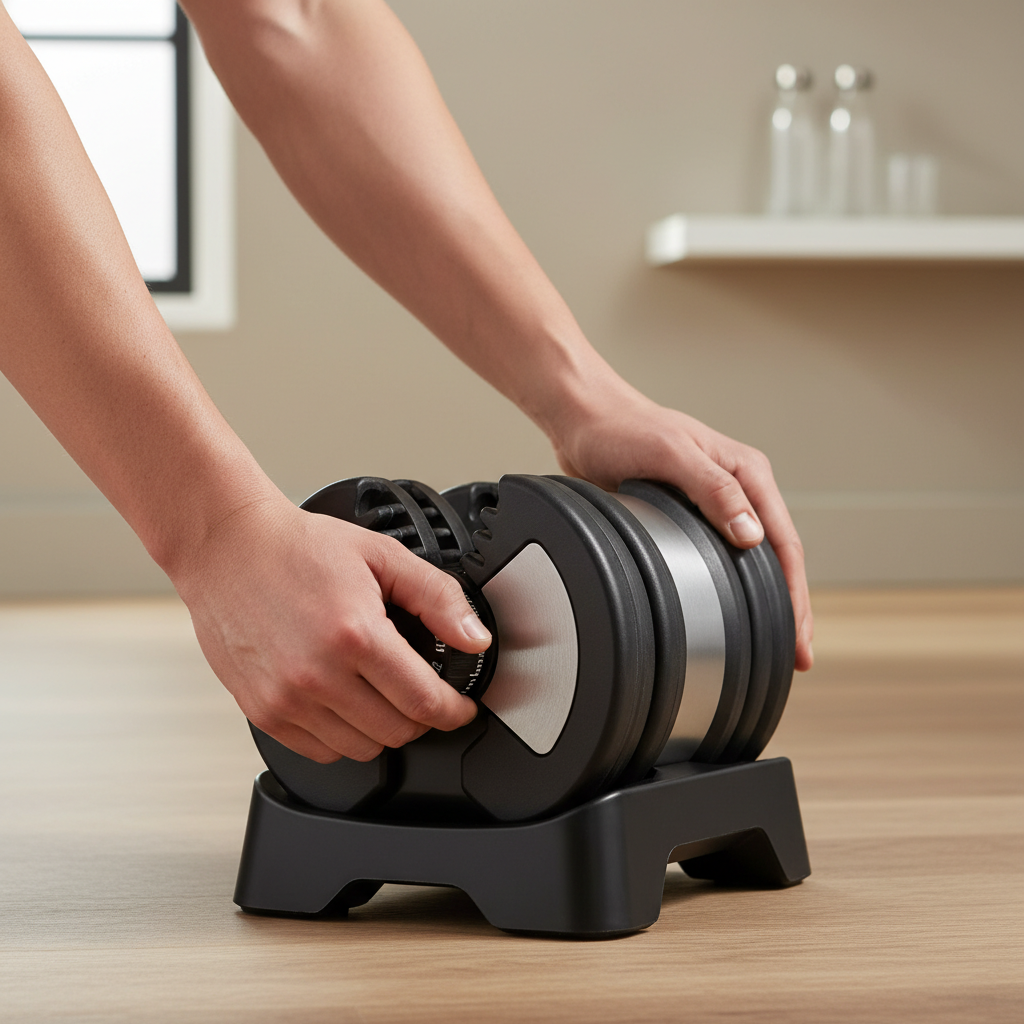
If you train supersets, drop sets, or time-based circuits, switching weights quickly matters more than people expect. Dial systems tend to be fastest; plate-loaded systems can be totally fine, but you’ll feel the friction if you change loads every set.
- Fast changes: great for HIIT, bodybuilding-style volume, and shared households.
- Slower changes: acceptable for strength-focused sessions with longer rest.
2) “Feel” in the hand: balance, width, and rattling
A common surprise: some adjustables feel bulky at lighter weights. Extra length can change how presses and curls feel, especially for smaller lifters. Mild plate movement can be normal, but heavy rattling often gets annoying.
3) Durability and what typically fails
Most failures are boring: worn latches, cracked plastic carriers, or dial mechanisms that get gritty. If you expect rough handling, prioritize simpler mechanics and a reputation for replacement parts.
4) Weight range and jump size
Choose the weight range based on your strongest movements, not your curls. Also look at how the system increments. Smaller jumps help with shoulder work and rehab-style training; bigger jumps are fine for rows, deadlifts, and presses.
Quick comparison table: common adjustable dumbbell styles
Brand models vary a lot, but most adjustable systems fall into a few categories. Use this as a shortcut to narrow your options.
| Type | How it adjusts | Best for | Trade-offs to expect |
|---|---|---|---|
| Dial-select | Turn dial, lift from cradle | Fast-changing workouts, shared use | More moving parts, bulky head on some models |
| Pin-select | Move a pin, lift from base | Simple operation, consistent feel | Base needs stable placement, check lock engagement |
| Plate-loaded (spinlock or quick collar) | Add plates manually | Budget builds, long-term flexibility | Slower changes, more parts to store |
| Expandable modular | Add expansion kits over time | Growing strength levels, long runway | Higher upfront complexity, expansions can add cost |
How to choose the right set (a practical checklist)
If you’re stuck between two options, this checklist usually breaks the tie.
- Your top weight needs: what do you realistically need for rows, squats, RDLs, presses?
- Change frequency: do you change weight every set, or every few exercises?
- Grip comfort: handle diameter, knurling (texture), and any sharp edges.
- Storage plan: stand included or separate, footprint, and whether kids/pets can access it.
- Noise tolerance: apartment floors and early-morning training make this real.
- Drop risk: if you do heavy goblet squats or renegade rows, think about “oops” moments.
One more thing people forget: if two people train together, a second pair can matter more than “the perfect” mechanism. Waiting for weights kills momentum.
Recommended picks by scenario (not one-size-fits-all)
There isn’t a universal “best,” but there are clear best fits depending on how you train and how much space you have.
If you want the most convenience in a small space
- Look for: dial-select or pin-select systems, a stable cradle, clear markings.
- Why: quick jumps make circuits and supersets feel smooth.
- Watch out for: long dumbbell length at light settings, plastic parts in high-wear zones.
If you care most about a “traditional dumbbell feel”
- Look for: shorter profile, solid lockup, minimal rattle, metal plates where possible.
- Why: shoulder presses, curls, and lateral raises tend to feel better.
- Watch out for: some compact sets top out at moderate weight.
If you’re building strength and expect heavier loads
- Look for: higher maximum weight, upgrade paths, strong warranty terms.
- Why: rows, split squats, RDLs can outgrow entry ranges quickly.
- Watch out for: larger jump sizes that make progression harder on smaller muscle groups.
If you’re on a tighter budget and don’t mind slower changes
- Look for: plate-loaded handles with spinlock or quality collars, standard plates.
- Why: parts are replaceable, and the system stays useful for years.
- Watch out for: setup time, more clutter, and plates that scratch floors without mats.
Setup and safety tips you’ll actually use
Adjustable systems are safe when used correctly, but the failure mode is usually user error: not fully seated in the cradle, misread setting, or a collar not tightened.
According to American Council on Exercise (ACE), using proper form and appropriate loads helps reduce injury risk during resistance training. If you have a prior injury or pain that changes your movement, it’s smart to consult a qualified professional.
- Always confirm lock engagement: do a quick tug and small rotation before your set.
- Use a flat, stable surface: uneven carpet can tilt a cradle and cause mis-seating.
- Protect your floor: rubber mats reduce noise and help prevent dents.
- Avoid dropping: many adjustable mechanisms are not designed for repeated drops.
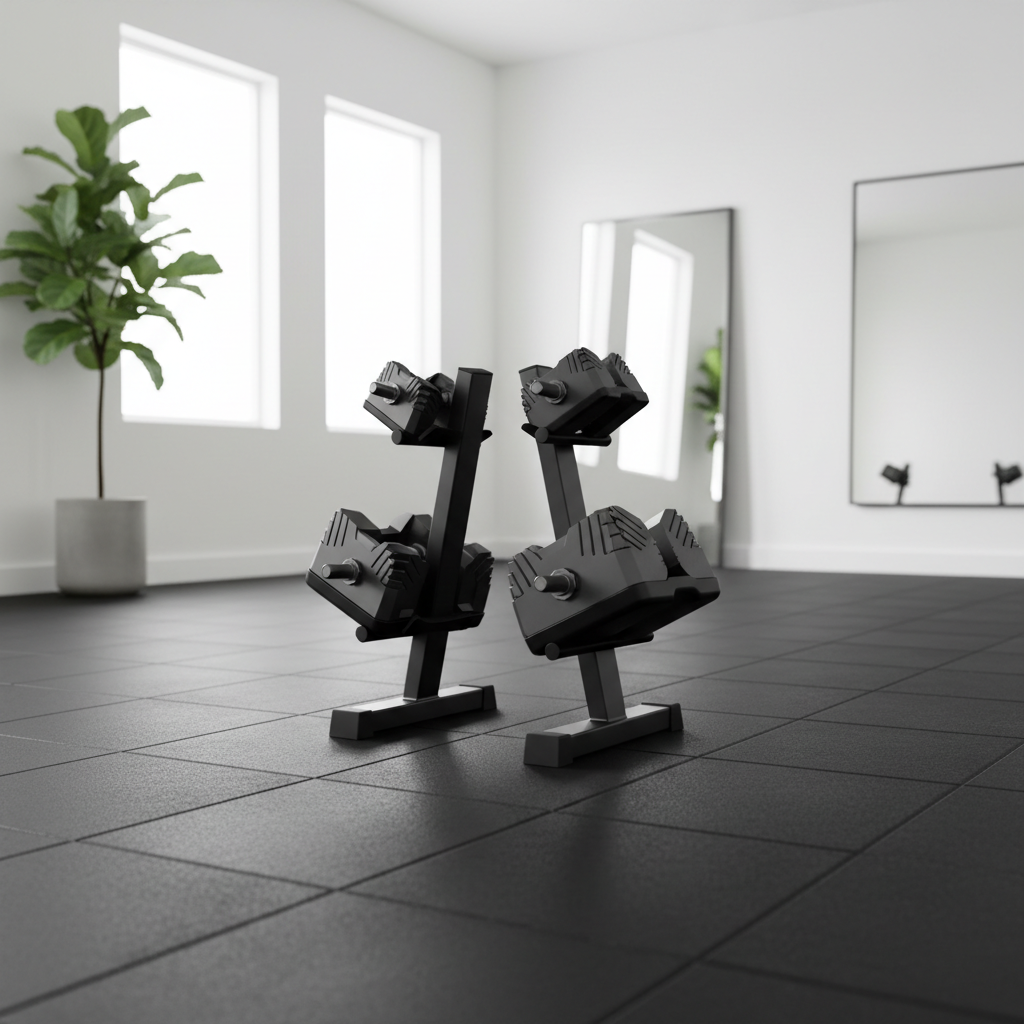
- Store intentionally: keep them on the base/stand, not loose on the floor.
How to train with adjustable dumbbells (simple, effective routine ideas)
Where adjustable dumbbells shine is consistency: you can make small load changes and keep progression moving even when time is tight.
Key takeaways (keep this part simple)
- Pick 6–10 repeatable moves and run them for 8–12 weeks.
- Add reps before weight when jump sizes feel big.
- Track two numbers: load and reps, nothing fancy.
3-day full-body template (modify as needed)
- Day A: Goblet squat, floor press, one-arm row, RDL, plank
- Day B: Split squat, overhead press, chest-supported row (bench), hip hinge, carry
- Day C: Front-foot elevated split squat, incline press, renegade row (light), lateral raise, curl/extension superset
If your set has bigger increments, micro-progress with reps, tempo (slower lowering), or extra sets. It’s not “less legit,” it’s often the realistic way to progress at home.
Common mistakes that lead to buyer’s remorse
- Buying too light: rows and hinges usually outgrow the range first.
- Ignoring length: long adjustables can feel awkward on curls and presses.
- Assuming all cradles are equal: wobbly bases create daily frustration.
- Overvaluing maximum weight: if the jumps are huge, the top end may not matter.
- Skipping a stand: floor storage sounds fine until your back disagrees.
Conclusion: what to buy next, based on your reality
The best adjustable dumbbells for your home gym are the ones you can change quickly, store safely, and progress with week after week without feeling like the equipment fights you.
If you want one clear next step, do this: write down your heaviest target lift (usually row or RDL), pick a set that comfortably covers it, then choose the adjustment style that matches how often you change weights. Convenience sounds like a luxury until you’re six weeks in and still showing up.
FAQ
Are adjustable dumbbells worth it compared to a full dumbbell rack?
For most home gyms, yes. A rack feels great, but it costs more and eats space. Adjustables usually deliver “enough” variety to progress for a long time, especially for general strength and muscle-building.
What weight range should I buy for adjustable dumbbells?
Many people underestimate the top end needed for rows, split squats, and hinges. Choose based on your strongest lifts, not accessory work. If you’re unsure, going slightly heavier often ages better.
Do dial adjustable dumbbells break easily?
They can be durable, but they have more moving parts. If you’re careful about re-racking correctly and avoiding drops, they often hold up well. If you expect rough handling, simpler systems may feel safer.
Can I drop adjustable dumbbells during workouts?
In many cases, it’s not recommended. Even if the plates survive, the locking mechanism might not. If your training style includes frequent dropping, consider a more rugged setup and ask the manufacturer about drop tolerance.
Why do adjustable dumbbells feel longer than regular ones?
They often carry extra hardware and plate length to cover multiple weight settings. That length changes leverage slightly, which you notice most on curls, presses, and some shoulder work.
Do I need a stand for adjustable dumbbells?
You don’t strictly need one, but most people end up happier with a stand or at least a stable base location. It reduces setup friction, protects the mechanism, and makes workouts feel less cluttered.
Are adjustable dumbbells safe for beginners?
Usually, yes, as long as you start with manageable loads and confirm the lock before lifting. If you have pain, prior injuries, or uncertainty about form, consulting a qualified trainer or clinician can help.
If you’re trying to pick between a couple sets and want a more “no regrets” choice, list your top 5 exercises, your space limits, and how often you change weights mid-session, then match the mechanism to your routine rather than the hype.