Fitness for beginners usually fails for one simple reason, people start too hard, too soon, then soreness, confusion, or boredom takes over. You do not need a perfect routine or fancy gear to begin, you need a plan that fits your week and feels doable on day one.
This guide keeps it simple, how to choose a goal, what to do in your first month, how hard to push, and how to stay consistent when motivation drops. If you want a friendly, realistic starting point that still respects safety, you are in the right place.
What “getting fit” means when you are new
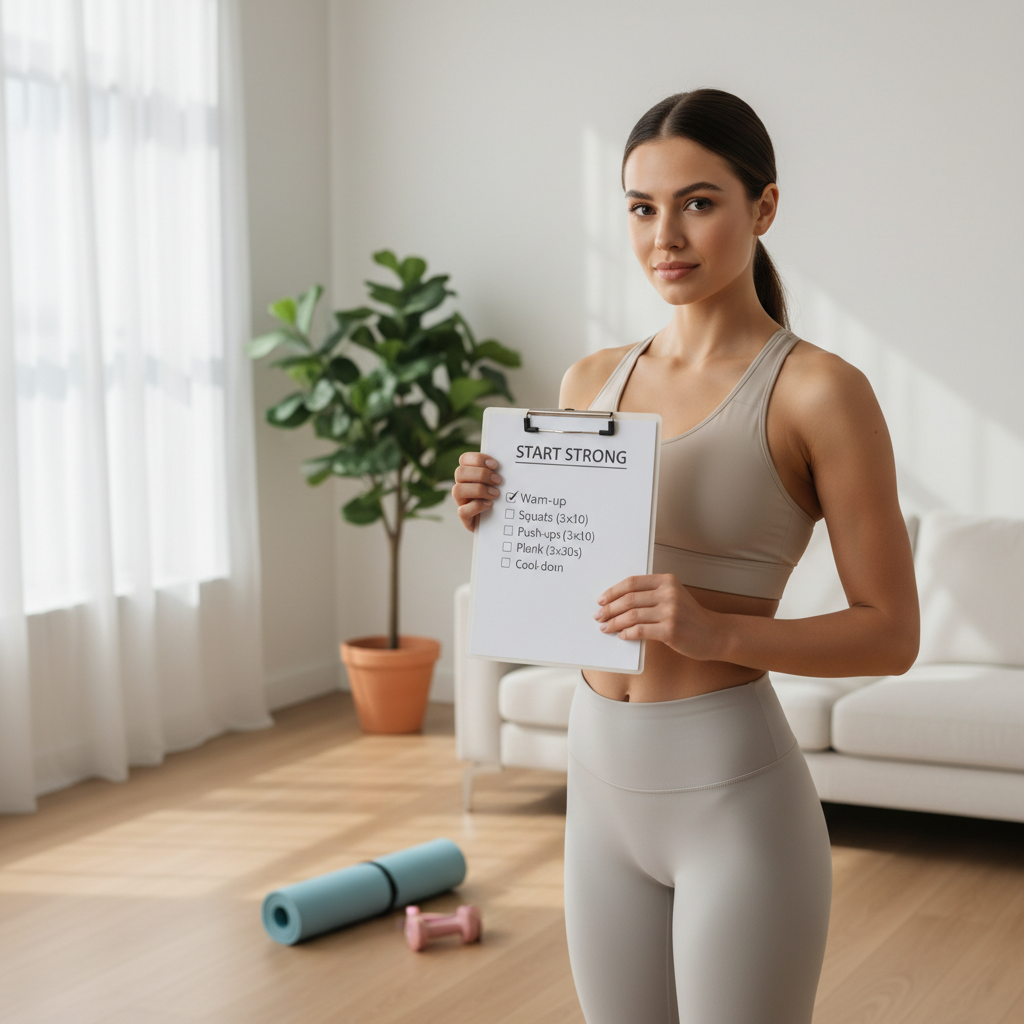
Most beginners think fitness equals intense workouts and quick visual changes, but early progress often looks quieter, your energy improves, stairs feel easier, sleep settles, your mood gets steadier. Those wins matter because they make the habit stick.
It also helps to separate three buckets, strength (muscle and joints), cardio (heart and lungs), and mobility (range of motion and control). A balanced beginner plan touches all three, without cramming them into every single session.
- Strength: 2–3 sessions per week, full-body works well.
- Cardio: 2–4 sessions per week, mostly easy effort.
- Mobility: a few minutes most days, especially hips, ankles, shoulders.
Common reasons beginners quit (and how to avoid them)
The most common trap is copying an advanced routine from social media, then feeling like you are “behind” when it crushes you. The fix is not more willpower, it is better scaling, shorter sessions, lighter loads, more rest.
Another issue is chasing soreness as proof you did it right. Soreness can happen, especially early, but constant soreness often means recovery cannot keep up. According to ACSM (American College of Sports Medicine), beginners benefit from progressive overload, meaning you increase challenge gradually, not overnight.
- All-or-nothing thinking: missing one workout does not “ruin the week.” Restart next day.
- No clear target: “get fit” is vague, choose one priority for the next 4 weeks.
- Too much, too soon: start with the minimum you can repeat, then add.
- Diet whiplash: extreme restriction often backfires, aim for steadier meals.
A quick self-check: what kind of beginner are you?
Before picking workouts, figure out what your real starting point looks like. This takes two minutes and saves you weeks of frustration.
- You are returning after a long break if you used to train but feel deconditioned now, start even easier than your pride wants.
- You are a total beginner if form and pacing feel unfamiliar, prioritize technique and consistency.
- You have aches or medical considerations if pain appears with daily tasks, or you have conditions/meds that affect exercise tolerance, consider asking a clinician or qualified trainer.
Simple readiness checks you can try, none should cause sharp pain:
- Can you walk 20 minutes at a conversational pace?
- Can you do 5–10 controlled sit-to-stands from a chair?
- Can you hold a plank on elbows and knees for 15–30 seconds with steady breathing?
Your first 4 weeks: a simple, realistic plan
If you only remember one thing, start with a schedule you can keep on your worst normal week. For many people, that is 3–4 total sessions, 25–45 minutes each. This is enough for visible progress in strength and stamina over time.
Weekly template (mix and match)
- Day 1: Full-body strength (A)
- Day 2: Easy cardio, 20–30 minutes
- Day 3: Rest or mobility, 8–12 minutes
- Day 4: Full-body strength (B)
- Day 5: Easy cardio or a long walk
- Weekend: Optional fun activity, light hike, bike, pickup sport
Keep intensity moderate. A helpful guide is RPE, rate of perceived exertion, 1–10. Most work should feel like 5–7, challenging but controlled, you could do a bit more if needed.
Beginner workouts you can actually follow
Below is a practical starting point for fitness for beginners. You can do it at home with bodyweight and a pair of light dumbbells, or in a gym with machines. Focus on smooth reps and steady breathing.
Strength A (about 30–40 minutes)
- Squat pattern: chair squat or goblet squat, 2–3 sets of 8–12
- Push: incline push-up or machine chest press, 2–3 sets of 8–12
- Pull: one-arm dumbbell row or cable row, 2–3 sets of 8–12
- Carry: farmer carry, 4 x 20–40 seconds
- Core: dead bug, 2 sets of 6–10 per side
Strength B (about 30–40 minutes)
- Hinge pattern: hip hinge drill, then Romanian deadlift with light weights, 2–3 sets of 8–12
- Single-leg: split squat or step-up, 2–3 sets of 6–10 per side
- Overhead: dumbbell shoulder press or machine press, 2–3 sets of 8–12
- Pull: lat pulldown or band pulldown, 2–3 sets of 8–12
- Core: side plank (knees down ok), 2–3 x 15–30 seconds
Key point: stop sets with 1–3 reps “in the tank.” If your form breaks, the set is over even if the rep target is not met.
Progress rules that keep you safe and moving forward
Progress does not need to be dramatic, it needs to be consistent. Many beginners do better adding small upgrades every 1–2 weeks rather than jumping weight fast.
- Reps first: keep the same weight, add 1–2 reps per set until you hit the top of the range.
- Then load: increase weight slightly, return to the lower end of the rep range.
- Or add time: for walking or cycling, add 5 minutes, not 30.
- Deload when needed: if fatigue stacks up, do an easier week rather than quitting.
According to CDC, adults benefit from both aerobic activity and muscle-strengthening activity each week. You do not need to hit a perfect target immediately, but keeping both in your routine is a smart north star.
Nutrition, recovery, and the stuff that makes workouts work
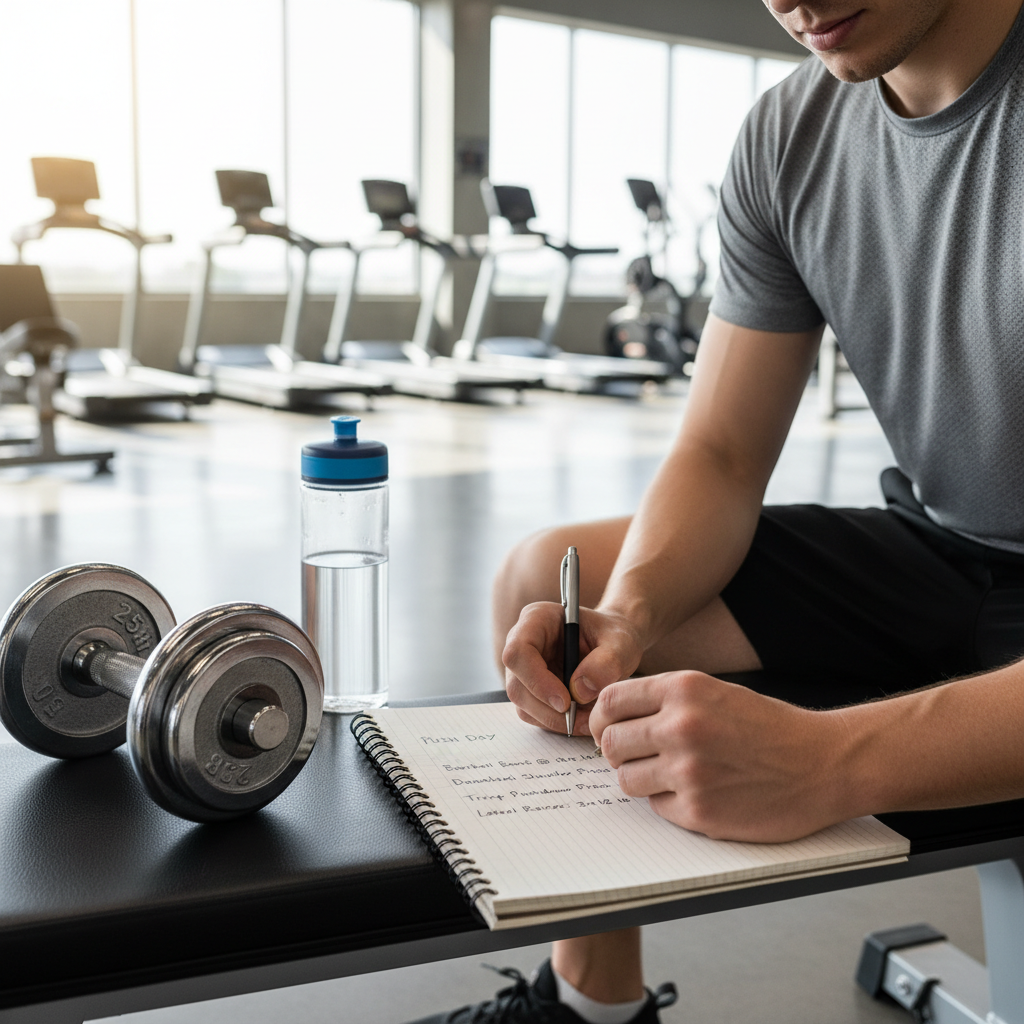
If training is the spark, recovery is the fuel. Many people start a routine, then unknowingly under-eat protein, sleep too little, and wonder why everything feels hard.
Practical recovery habits
- Protein with meals: aim for a protein source at breakfast, lunch, dinner.
- Hydration: if urine stays dark most of the day, drink more water, especially around workouts.
- Sleep: when sleep drops, keep workouts lighter rather than skipping for weeks.
- Steps: walking is underrated conditioning, it also helps recovery on non-gym days.
Nutrition is personal, and medical conditions can change what “good” looks like, so if you have concerns or a history of disordered eating, it is smart to consult a registered dietitian or healthcare professional.
Beginner gym vs. home: pick what you will repeat
The best setup is the one you will use. A home plan removes commute friction, a gym gives more equipment and sometimes more motivation. Neither is morally superior, it is just logistics.
| Option | Pros | Watch-outs |
|---|---|---|
| Home workouts | Zero travel, private, easy to fit into a busy day | Limited loading options, distractions |
| Gym workouts | Machines help form, more variety, heavier progression | Can feel intimidating, time cost |
| Hybrid | Most flexible, best long-term adherence for many | Needs a simple plan to avoid random sessions |
Common mistakes and how to fix them fast
Most “plateaus” in fitness for beginners are not real plateaus, they are inconsistent weeks, unclear progression, or doing random exercises without repeating them long enough to improve.
- Changing your routine every workout: run the same plan for 4–6 weeks before judging it.
- Going hard on cardio every session: keep most cardio easy, save hard intervals for later.
- Ignoring pain signals: muscle burn is normal, sharp pain, dizziness, chest pain are not, stop and seek medical advice.
- Skipping warm-up entirely: 5–8 minutes of easy movement plus a few lighter sets usually helps.
When to get professional help
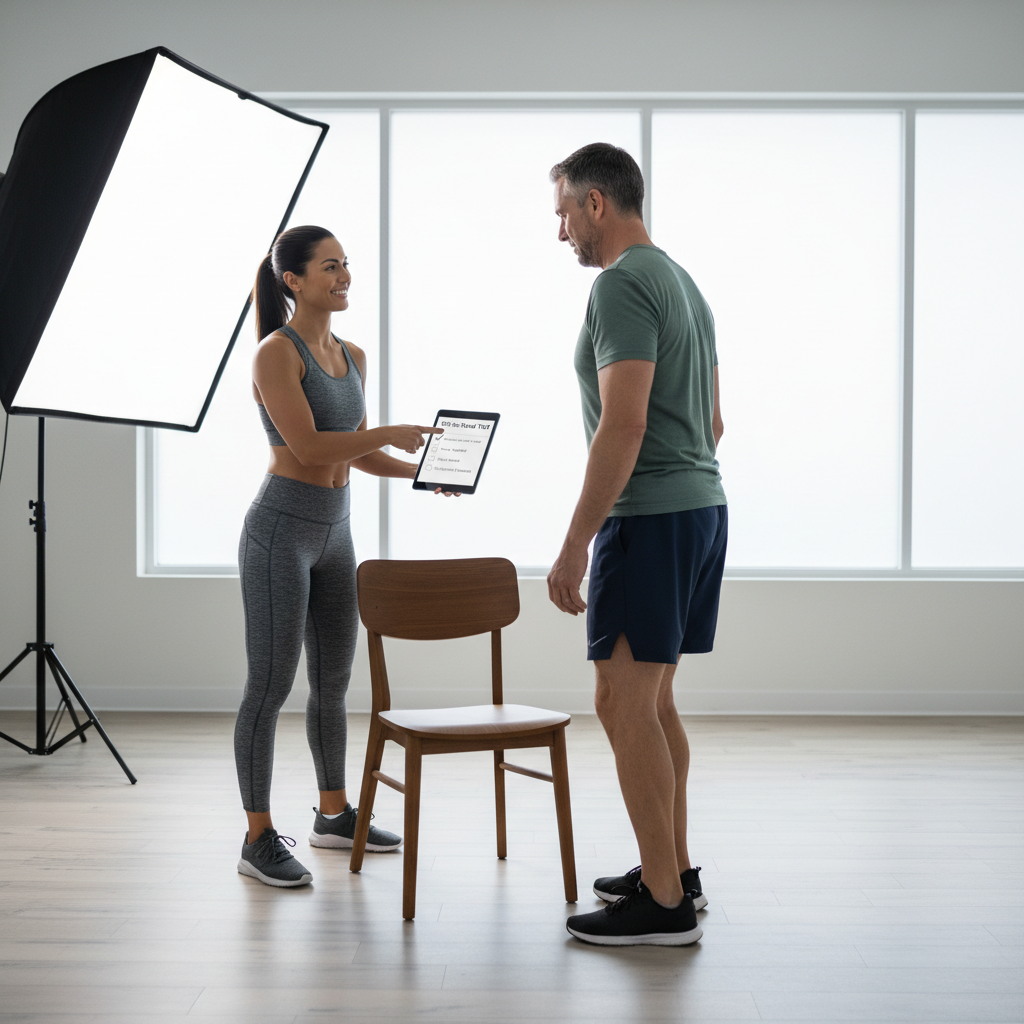
If you feel stuck, you do not always need a full-time coach, sometimes one or two sessions fix technique and confidence. Consider professional support when pain keeps repeating, you have a medical condition that affects exercise, or you feel anxious walking into a gym and want a clear on-ramp.
According to NSCA (National Strength and Conditioning Association), qualified professionals help with safe exercise technique and program design. In the US, looking for a certified personal trainer, physical therapist, or similarly credentialed professional is often a reasonable starting point.
Conclusion: your next two steps
Fitness for beginners works when the plan feels almost too easy at first, because that is what you can repeat. Pick two strength days and two easy cardio days, keep sessions short, and track one small progression, one more rep, five more minutes, slightly better form.
If you want an action list, choose your weekly template today, and schedule the first two workouts on your calendar like real appointments. Motivation shows up more often after you start, not before.
Key takeaways
- Consistency beats intensity, especially in the first month.
- Use a simple full-body plan, repeat it long enough to improve.
- Progress in small steps, and treat recovery as part of training.
- If pain or medical factors show up, get guidance from a qualified professional.
FAQ
How many days a week should a beginner work out?
For many people, 3–4 days per week is a realistic sweet spot, enough stimulus to improve without feeling like life revolves around training. If your schedule is chaotic, even 2 days can build momentum.
Is it better to start with cardio or weights?
Most beginners do well with both, light cardio for endurance and recovery, plus strength training to build muscle and joint resilience. If you must pick one to start, choose the one you will do consistently for four weeks.
How sore is too sore when starting?
Mild to moderate soreness is common, especially after new movements. Severe soreness that limits normal activity for several days, or joint pain that feels sharp, is a sign to back off and possibly consult a professional.
What is the simplest gym routine for a beginner?
A full-body routine 2–3 times per week using a squat pattern, a hinge, a push, a pull, and a carry covers most needs. Machines can be a helpful bridge while you learn form.
Do I need supplements to see results?
Usually not. Many people see solid progress with adequate protein, consistent meals, and sleep. If you consider supplements, it is reasonable to check interactions with medications and ask a clinician if you have health concerns.
How long until I see results?
Often you notice energy and mood changes within a couple weeks, while visible physique changes vary by genetics, starting point, training quality, and nutrition. A better metric early on is performance, more reps, longer walks, better control.
What if I am overweight and worried about impact on joints?
Start with low-impact options like walking, cycling, swimming, and strength training that emphasizes controlled range of motion. If joint pain is persistent, a physical therapist can help you choose safer variations.
If you are trying to build a beginner routine but keep second-guessing exercises, intensity, or form, it can be easier to follow a simple plan for four weeks and adjust based on how your body responds, and if you prefer a more guided approach, a certified trainer or physical therapist can help tailor the basics to your schedule and limitations.