Cardio equipment at home can be a game-changer, but only if you buy what fits your space, your joints, and how you realistically work out when nobody’s watching.
A lot of people get stuck between “I want to sweat more” and “I don’t want a clothes-hanger treadmill in six months.” This guide narrows the field, explains what each option is best at, and helps you choose without overpaying for features you won’t use.
I’ll also share a quick decision checklist, a comparison table, and a few starter workouts so you can go from browsing to actually training.
What “best” really means for home cardio equipment
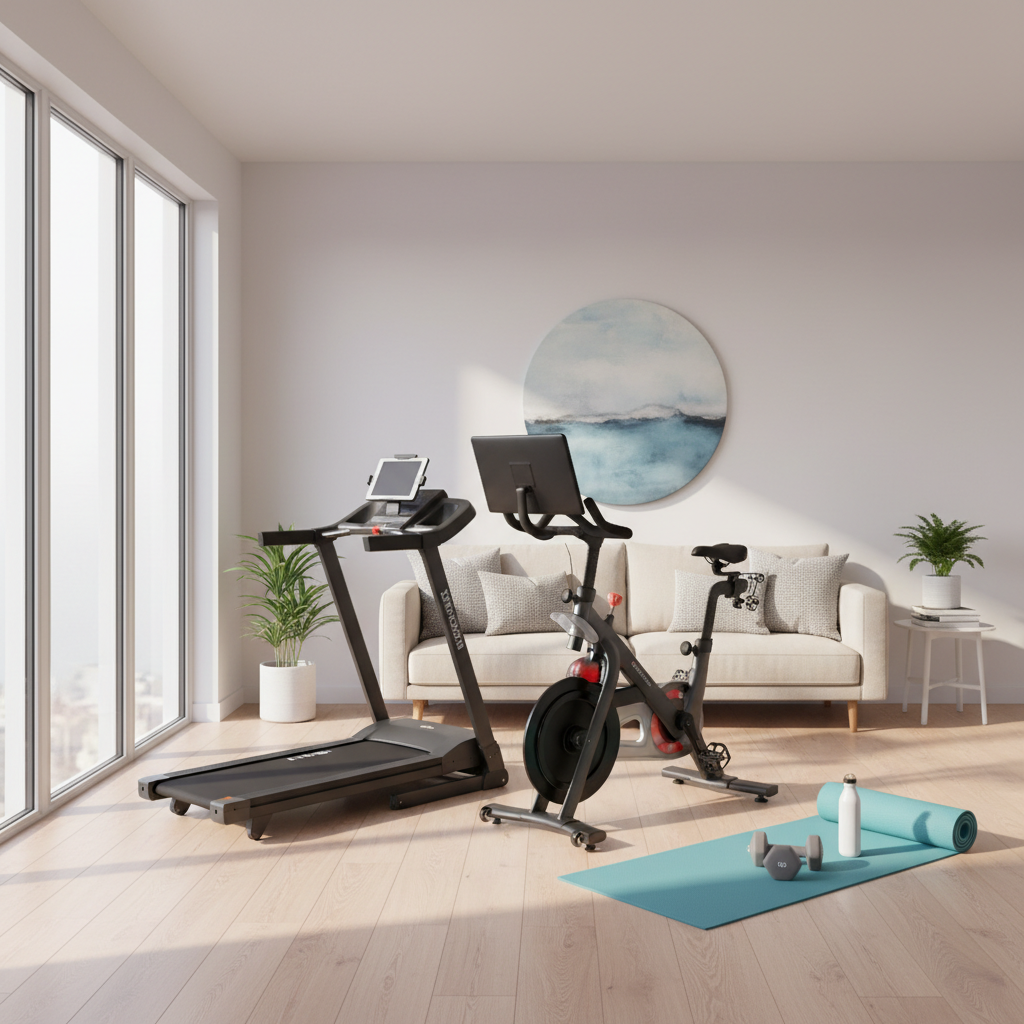
The best machine is usually the one that matches your friction points: noise, storage, knee or back tolerance, and how motivated you feel on a random Tuesday night. Specs matter, but they’re not the first filter.
- Adherence beats intensity: a moderate machine you use 4x/week typically helps more than a monster setup you avoid.
- Joint comfort is a real limiter: impact and poor fit often derail consistency.
- Space and noise are “relationship factors”: if it rattles floors or blocks walkways, it gets used less.
According to the American Heart Association, adults generally benefit from regular aerobic activity, and many people do well with a mix of moderate and vigorous sessions. If you have medical concerns, it’s smart to check with a clinician before pushing intensity.
Quick comparison table: common cardio machines at a glance
Use this as a reality check before you fall in love with one category. Prices vary widely by brand and features, so treat ranges as typical shopping bands.
| Equipment | Footprint | Noise | Joint impact | Who it fits best | Typical cost range |
|---|---|---|---|---|---|
| Treadmill | Medium–Large | Medium–High | Medium–High | Walkers/runners, incline fans | $500–$2,500+ |
| Exercise bike (upright) | Small–Medium | Low | Low | Budget cardio, easy sessions | $200–$900 |
| Spin bike | Medium | Low–Medium | Low | Intervals, structured rides | $400–$1,500+ |
| Elliptical | Medium–Large | Low–Medium | Low | Low-impact, full-body feel | $600–$2,000+ |
| Rowing machine | Medium (often stores upright) | Low–Medium | Low | Back-friendly (with form), full-body | $300–$1,800+ |
| Stair stepper/stepmill | Small–Large | Medium | Medium | Leg endurance, time-efficient sweat | $150–$3,000+ |
| Jump rope | Tiny | Medium | High | Short intense bursts, travel | $10–$40 |
Best cardio equipment at home by goal (with real-world tradeoffs)
If you want the simplest “just start” option: walking pad or basic treadmill
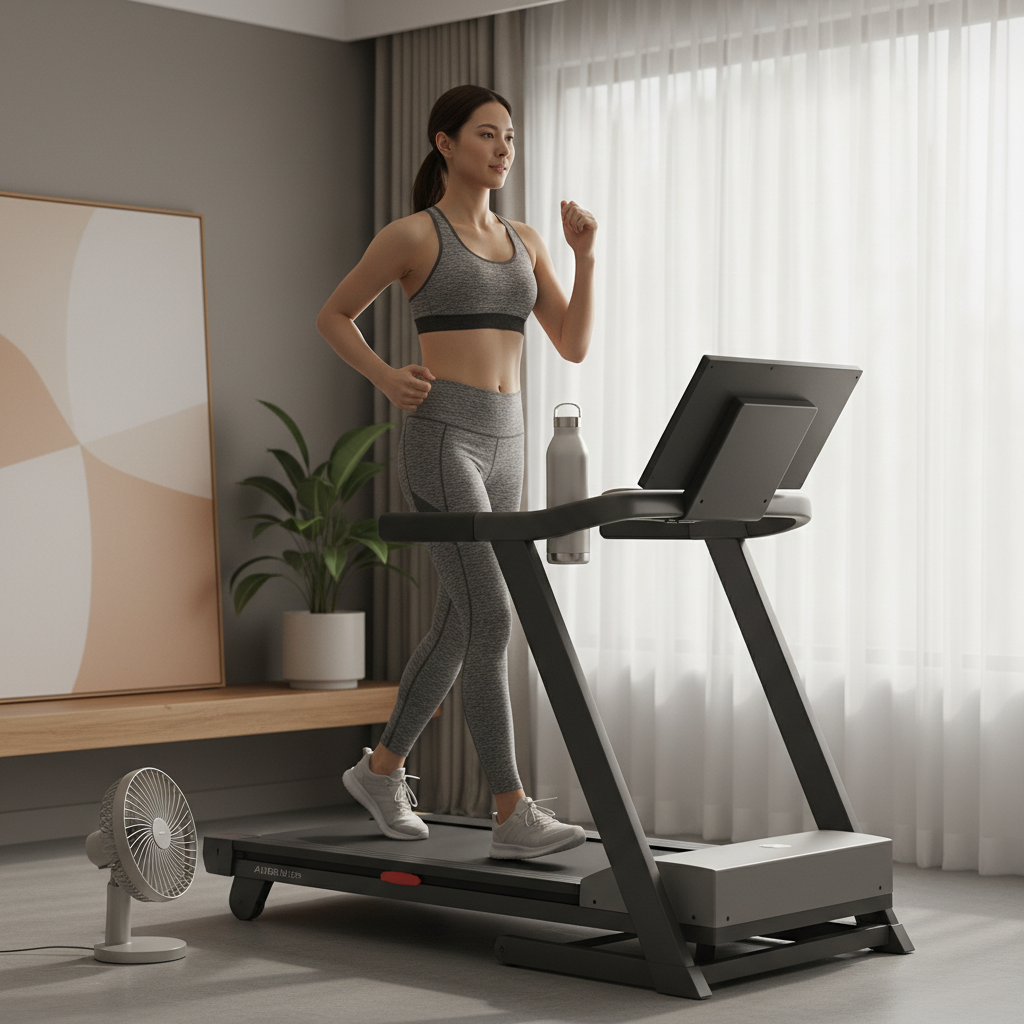
For many households, walking is the most repeatable habit. A walking pad works well for light cardio, step goals, and even easy incline-free sessions while watching TV. Full treadmills win if you truly plan to run.
- Look for: stable deck, easy speed controls, solid warranty terms.
- Watch out for: loud motors, narrow belts, shaky handrails.
Noise and downstairs neighbors matter. If your floor transmits vibration, you may need a thick mat, or a lower-impact option.
If your knees complain or you want quiet workouts: bike or elliptical
A bike is often the lowest-friction way to get cardio equipment at home without worrying about impact. The learning curve is small, volume stays low, and it’s easy to do steady state on busy days.
- Upright bikes tend to be cheaper and smaller.
- Spin bikes feel more “training-like” and handle intervals better.
- Ellipticals can feel smoother and more full-body, but take more room.
Fit matters more than people expect: seat height, handle reach, and pedal spacing can decide whether you love it or dread it.
If you get bored easily and want full-body conditioning: rower
Rowing hits legs, back, and arms, and it scales nicely from easy recovery to “why did I do this” intervals. Many models store upright, which is a big win in apartments.
- Look for: smooth pull, consistent resistance, comfortable handle.
- Form note: poor technique can irritate low back, so start easy and consider a coaching video or trainer if you’re unsure.
If you want fast sweat in short sessions: stepper, stepmill, or jump rope
Stepping can feel brutally effective for time-crunched days. It’s also one of the easiest ways to spike heart rate quickly, which some people love. The flip side is that calves and knees may need a gradual ramp-up.
- Steppers take little space but may feel repetitive.
- Stepmills feel more natural, cost more, and need more clearance.
- Jump rope is cheap and portable, but impact can be too much for some bodies and some floors.
Self-check: pick the right machine in 5 minutes
If you’re stuck, answer these quickly and choose the option that clears most boxes.
- Space: Do you have a dedicated corner, or does it need to fold/stand upright?
- Noise tolerance: Can someone take a call nearby, or do you need near-silent?
- Impact tolerance: Any knee/ankle/hip issues that make running feel risky?
- Motivation style: Do you like “set it and zone out” or guided classes and metrics?
- Workout time: More 20 minutes or 45 minutes?
- Climate: Do you avoid outdoor cardio because of heat, cold, or allergies?
- Budget: Are you buying once, or testing the habit first?
If three answers point toward low noise + low impact, bikes and ellipticals usually win. If your answers point toward “I want to walk daily,” a walking pad or treadmill tends to stick.
How to buy smart: features that matter (and ones you can ignore)
Features worth paying attention to
- Stability: wobble is a motivation killer, and it can be a safety issue.
- Warranty and service: especially for motorized gear. Read terms, not just the headline.
- Adjustability: seat/handle adjustments, stride length, or incline based on equipment type.
- Max user weight and build quality: not for judgment, for longevity.
Features that often get overbought
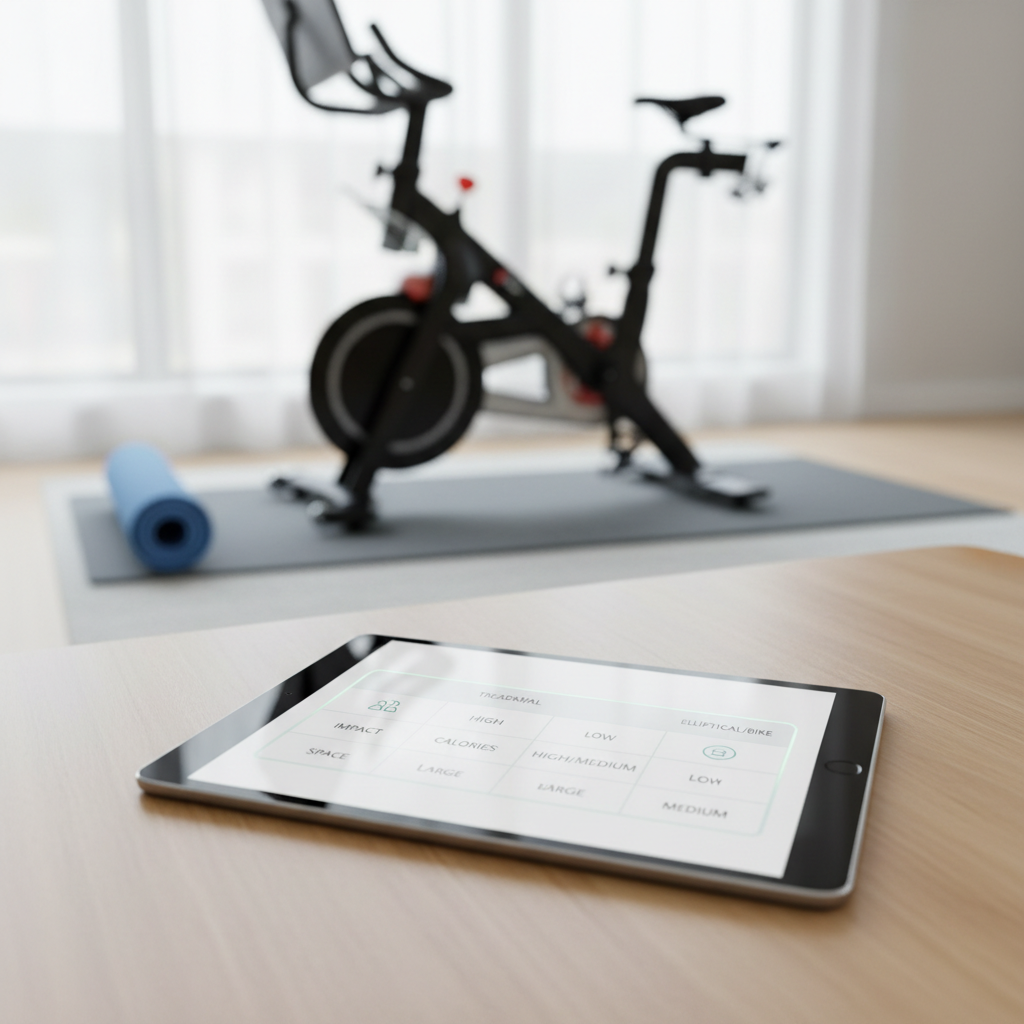
- Huge touchscreens: nice, but a tablet stand and good apps can do plenty.
- Extreme top speeds: if you’re not already running fast, you may never use it.
- Too many programs: most people rotate 2–3 favorites.
One practical tip: measure your ceiling height if you’re tall and considering a stepmill or incline treadmill. Clearance becomes a real issue fast.
Practical workouts you can start this week (no guesswork)
According to the Centers for Disease Control and Prevention (CDC), adults typically benefit from regular aerobic activity across the week. The exact plan should match your current fitness and any health considerations.
Workout A: “I’m rebuilding consistency” (3 days/week, 20–30 minutes)
- 5 minutes easy warm-up
- 15–20 minutes steady pace where you can talk in short sentences
- 2–5 minutes easy cool-down
This works on any cardio equipment at home, and it’s intentionally not heroic. The goal is to show up.
Workout B: Simple intervals (2 days/week, 20–25 minutes)
- 5 minutes easy
- 6 rounds: 1 minute hard, 2 minutes easy
- 3–5 minutes easy
“Hard” can mean heavier resistance on a bike, a faster row pace, or an incline walk. If you feel dizzy, chest pain, or unusual shortness of breath, stop and consider medical guidance.
Workout C: Low-impact fatiguing climb (1 day/week, 15–25 minutes)
- Pick bike/elliptical/stepper
- Start easy, then add a small resistance bump every 3–4 minutes
- Finish with 3 minutes easy
If you’re tempted to do all three plans at once, do less. Consistency tends to beat ambition in home setups.
Common mistakes (that make people think home cardio “doesn’t work”)
- Buying for a fantasy routine: the machine should match your most typical day, not your most motivated day.
- Going too hard early: soreness and burnout can shut the habit down for weeks.
- Ignoring fit: seat position, handle reach, and stride comfort change everything.
- Skipping a fan: airflow often makes indoor sessions feel 30% easier.
- No plan for boredom: shows, playlists, or guided workouts keep usage up.
When it’s worth asking a pro (or at least slowing down)
If you have a history of heart disease, uncontrolled blood pressure, dizziness, or joint pain that flares with activity, it may be safer to talk with a healthcare professional or a qualified trainer before you ramp up intensity. The goal is progress without turning training into a recurring injury loop.
If your main issue is pain during a specific motion, a physical therapist can often help you pick a machine and set it up, sometimes with small tweaks that make a big difference.
Conclusion: pick the machine you’ll actually use
The “best” home setup usually comes down to this: choose cardio equipment at home that feels easy to start, fits your space, and doesn’t punish your joints or your ears. For many people that’s a bike, a walking pad, or a rower, with the final choice driven by boredom tolerance and storage.
If you want a simple next step, pick one machine category today, set a 3-day schedule for the next two weeks, and keep every session short enough that you finish thinking, “I could do that again.”
FAQ
What is the best cardio equipment at home for small apartments?
Folding or upright-storing options usually work best: a walking pad, a compact bike, or a rower that stores vertically. If noise is a concern, bikes tend to be the safest bet.
Is a treadmill or bike better for weight loss?
Either can support fat loss, since diet and consistency drive results more than the machine type. Many people find bikes easier to repeat frequently, while treadmills can burn more calories per minute for some users if running feels comfortable.
What’s the quietest cardio machine for shared walls?
Magnetic-resistance bikes are often very quiet. Ellipticals can be quiet too, but squeaks show up if maintenance slips or the unit isn’t stable.
Can I get good cardio without a machine?
Yes: brisk outdoor walks, stairs, jump rope, and bodyweight circuits can work. The reason people still buy machines is convenience and repeatability, especially when weather or schedules get messy.
How much should I spend on home cardio equipment?
Spend enough to get stability and a decent warranty, then stop. If you’re unsure you’ll stick with it, a basic bike or jump rope can be a low-risk way to test the habit before upgrading.
Is rowing safe if I have low back pain?
It depends on the cause and your technique. Rowing can be low-impact, but poor form may aggravate back issues, so start easy and consider professional guidance if pain is a pattern.
Do I need a subscription for guided workouts?
No, but some people find it helps motivation. You can also use free videos, music intervals, or a simple timer and still get solid sessions.
How do I keep myself from quitting after two weeks?
Make the first month “too easy,” then build. Put the machine where it’s visible, add a fan, and keep a default workout you can do even when you’re tired.
If you’re trying to choose cardio equipment at home and want a more tailored shortlist, it helps to map your space, noise limits, and any joint concerns, then match those to two or three models you can realistically maintain, returns and warranty included.