
how to apply sunscreen for cycling is less about buying the “right” bottle and more about not missing the spots that burn fastest, ears, neck, hands, and that awkward gap between jersey and shorts.
If you ride for more than a quick spin, sun exposure adds up quickly because you are usually out for longer, sweating, and reflecting UV off pavement, water, or light gravel. The annoying part is that the same sweat and friction that make cycling feel great also make sunscreen fail sooner.
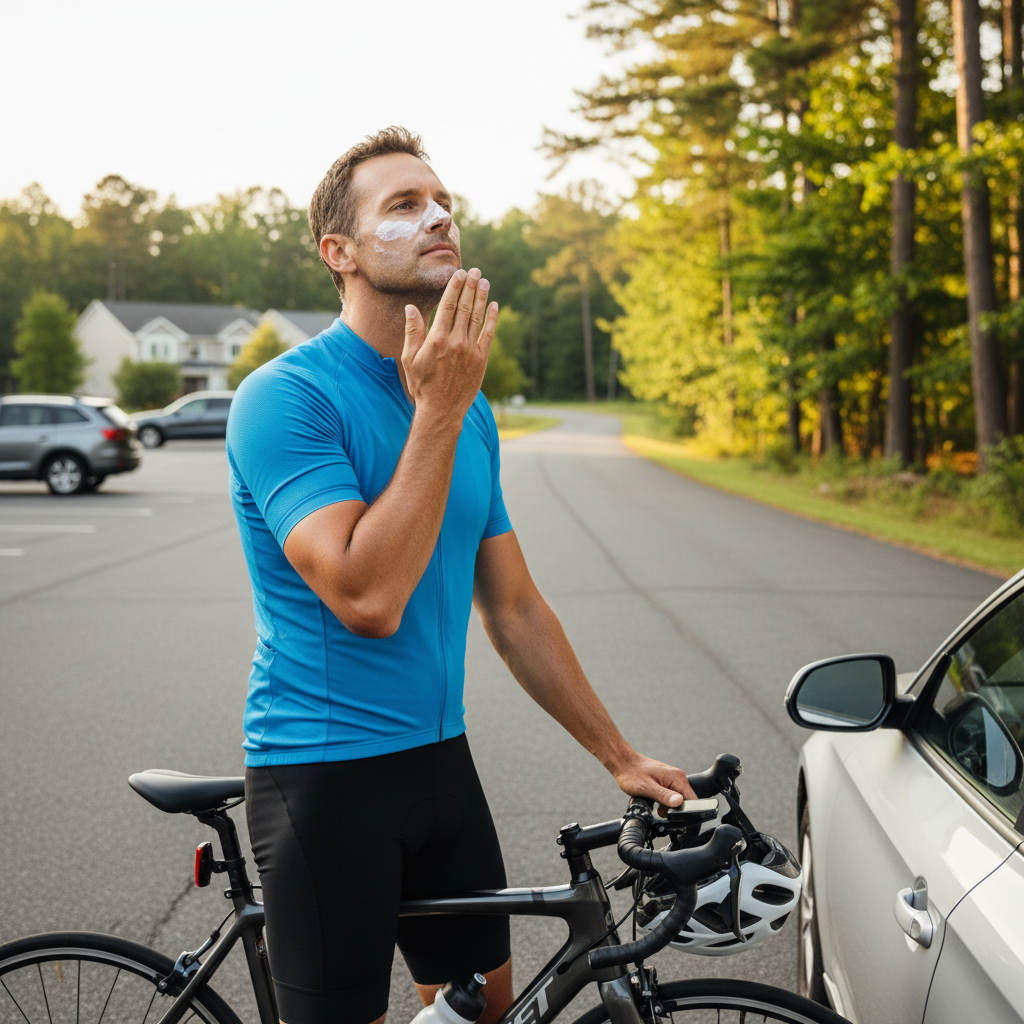
This guide breaks it down like a pre-ride checklist, what to put where, how long to wait, and how to reapply on the move without turning your gloves into a slippery mess. I’ll also point out a few common “I did everything right” mistakes that still lead to a stripey burn.
What makes cycling sunscreen tricky
On paper, sunscreen is simple, apply enough, reapply often. On a bike, a few cycling-specific issues get in the way.
- Sweat and airflow: Sweat dilutes product, wind dries it unevenly, and both can move sunscreen away from high points like nose and cheekbones.
- Friction zones: Helmet straps, sunglass arms, buff edges, and jersey collars rub product off faster than you expect.
- “Hidden” exposure: Riding posture puts the back of neck, ears, and tops of thighs in direct sun, even if you feel shaded up front.
- Eye sting risk: Many riders under-apply around the forehead because they hate runoff, then get burned right where the helmet vents funnel sun.
According to the American Academy of Dermatology, sunscreen works best when applied generously and reapplied at least every two hours, and sooner if you are sweating or wiping your skin often. For cycling, “sooner” is common.
Pick a sunscreen that matches your ride conditions
You can make almost any broad-spectrum SPF work if you apply enough and maintain it, but certain formulas reduce hassle on rides.
Quick selection guide
- SPF 30 vs SPF 50: SPF 30 is often fine for many rides, but SPF 50 can give a little buffer for missed spots and long exposure. Don’t treat higher SPF as permission to skip reapplication.
- Water-resistant label: Look for 40 or 80 minutes water resistance for sweaty rides. It does not mean “all-day.”
- Mineral vs chemical: Mineral (zinc oxide/titanium dioxide) can sting less for some riders near eyes, chemical formulas often feel lighter. Skin sensitivity varies, so adjust based on how your face reacts.
- Stick vs lotion: Sticks are great for on-the-go touch-ups on nose, ears, and the back of hands. Lotions or gels are faster for arms, legs, neck.
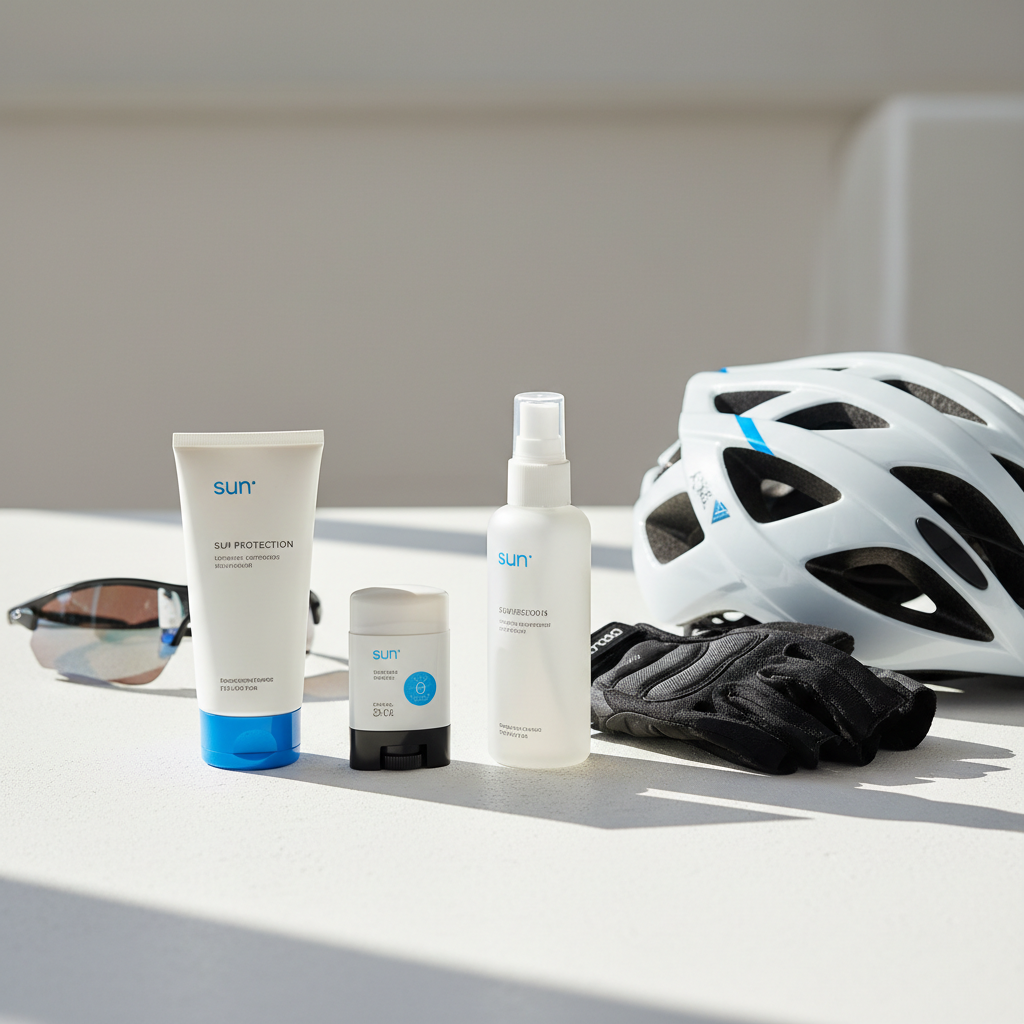
A note on sprays: Sprays can help with hard-to-reach areas, but they are easy to under-apply and can blow away in wind. If you use one, spray close, then rub in.
How to apply sunscreen for cycling: a step-by-step routine
how to apply sunscreen for cycling comes down to three things: enough product, correct timing, and coverage in the places cyclists miss. Give yourself a few minutes before you roll out.
Step 1: Apply early enough to “set”
A practical target is 15–20 minutes before the ride, especially for your face, so it has time to form a more even film. If you apply at the car and immediately start sweating hard, the first miles can wipe away what you just put on.
Step 2: Use enough product (most riders don’t)
According to the U.S. Food and Drug Administration, people often apply too little sunscreen, which reduces the protection they get. In real-life bike terms, if you are “barely glossy” right after application, you probably used too little.
- Face and neck: about two finger-lengths of lotion for many adults, then add more for ears and back of neck.
- Each arm: a generous palmful spread from shoulder to wrist, don’t stop at jersey sleeve line.
- Each leg (if exposed): enough to cover thighs evenly, especially tops and outer sides.
Exact amounts vary by body size and product texture, but the bigger risk is under-applying, not “wasting.”
Step 3: Cover the cyclist “burn map”
- Ears: top rim and behind the ear, this is a classic missed spot.
- Back of neck: where helmet straps meet skin and where jersey collar rubs.
- Hairline and forehead: apply slightly above where you think the helmet covers, vents still let light through.
- Nose bridge and cheeks: especially with sunglasses reflecting light upward.
- Hands: backs of hands and between fingers, sun hits here for hours on flat bars or hoods.
- Thigh gap: the small strip between shorts and jersey when you are in an aggressive position.
Step 4: Let gear go on last
Put sunscreen on first, then sunglasses, then helmet. If you strap up immediately, you can scrape product off and create clean “lines” that burn later.
Reapplication on rides: what actually works
If your ride is short, you may not need to reapply. If you ride longer, you usually do. The annoying truth is that sweat, towel wipes, and repeated face touches can shorten the window.
Simple reapply timing by ride length
| Ride length | Typical reapply plan | What to prioritize |
|---|---|---|
| Up to 60 minutes | Apply once before riding | Face, ears, neck, hands |
| 60–120 minutes | Consider a touch-up at midpoint | Nose, cheeks, neck line, hands |
| 2–4 hours | Reapply about every 2 hours, sooner if sweating heavily | All exposed skin, friction zones |
| All-day event | Build planned stops for reapply | Full coverage, plus lip SPF |
What to carry: Many cyclists find a small sunscreen stick plus a tiny lotion tube is the least messy combo, stick for face and hands, lotion for neck and arms.

On-the-move trick: If you cannot fully reapply, do a high-impact touch-up: nose, cheekbones, ears, back of neck, backs of hands. Not perfect, but it prevents the worst burns.
Quick self-check: are you applying it well enough?
If you keep getting burned in the same places, it’s usually a coverage issue, not an SPF issue. Use this list before your next ride.
- I can name my top 5 burn spots and I apply there deliberately, not “whatever is left.”
- I apply sunscreen before putting on helmet and sunglasses.
- I cover ears, back of neck, and hands every time.
- I reapply on rides longer than two hours, or sooner when sweating heavily.
- I don’t rely on spray alone, if I spray, I rub it in.
- I use lip balm with SPF when sun is intense, especially on long climbs.
If you checked fewer than four, you likely have easy gains without changing brands.
Common mistakes cyclists make (and easy fixes)
- Only applying to “front” areas: Cycling posture exposes the back of neck and outer arms. Fix: apply in front of a mirror once, memorize the pattern.
- Skipping because it’s cloudy: UV can still be significant on hazy days. Fix: make sunscreen a default for daytime rides.
- Applying too close to the start: You sweat it off in the first 10 minutes. Fix: apply earlier, then do a small top-up right before rolling.
- Letting straps wipe it off: Helmet straps create clean lines. Fix: after you buckle up, dab a tiny amount along strap edges.
- Reapplying over salt and grit: That can feel gross and cause irritation for some skin types. Fix: wipe gently with water, then reapply, or use a stick to minimize rubbing.
If you get frequent eye sting, consider a mineral sunscreen around the forehead and temples, and keep it slightly below the hairline so sweat does not pull it straight into your eyes. Skin reactions vary, so adjust carefully.
Key takeaways you can use on your next ride
- Apply early and generously: 15–20 minutes before riding works well for many riders.
- Hit the cyclist burn map: ears, back of neck, hands, nose, and that jersey-short gap.
- Plan reapplication like you plan nutrition: longer rides need a strategy, not hope.
- Use the right format for the moment: lotion at home, stick at stops.
how to apply sunscreen for cycling becomes simple once it’s a routine: apply before gear, cover the usual miss spots, then reapply in a targeted way on longer days. If you want one action step, set a reminder for the midpoint of your next long ride and keep a small stick where you store your ride snacks.
If you have a history of skin cancer, unusual moles, or repeated severe burns, it’s smart to ask a dermatologist for personalized advice, especially if you are training outdoors frequently.