Beginner cardio plan questions usually come down to one thing: how to get fitter without feeling wrecked, bored, or worried you’re doing it “wrong.” You don’t need fancy equipment or brutal workouts, you need a simple structure that makes it easy to show up, recover, and build momentum.
If you’re new to fitness, your biggest risk is rarely “not working hard enough,” it’s doing too much too soon, then quitting because your knees hurt, your shins ache, or every session feels like punishment. Cardio can be surprisingly gentle when you set the right pace and pick the right mode.

This guide gives you a realistic starting plan, a quick self-check to choose the right level, and a progression that fits real schedules. You’ll also see common mistakes that slow progress, plus when it’s smart to ask a professional for help.
What a “good” beginner cardio plan actually looks like
A workable plan has three traits: repeatable, recoverable, and trackable. If any one is missing, people tend to drift or overdo it.
- Repeatable: sessions feel doable even on average days, not just your most motivated day.
- Recoverable: you finish thinking “I could do that again,” not “I need three days off.”
- Trackable: you can measure progress without turning every workout into a test.
According to Centers for Disease Control and Prevention (CDC), adults typically benefit from regular aerobic activity across the week, and beginners often do best building up gradually. Your job early on is consistency, not intensity heroics.
Why beginners get stuck (and how to avoid it)
Most early plateaus have boring causes, which is good news because they’re fixable.
- Pacing too hard: if every workout feels like a max effort, soreness and dread pile up fast.
- Choosing high-impact too soon: running is great, but many bodies need a ramp-up before joints and tendons feel happy.
- No clear progression: repeating the same 20 minutes forever stops feeling rewarding, then motivation fades.
- All-or-nothing scheduling: missing one workout turns into missing a week.
Keep this mindset: your first month is about skill building too, learning pace control, warm-ups, and how recovery feels.
Quick self-check: choose your starting level
Use this as a practical filter. If anything here feels uncertain because of medical history, medications, or symptoms, consider asking a clinician or a qualified trainer to guide intensity.
Level A: True beginner
- You get winded quickly climbing stairs, or you haven’t trained consistently in months (or years).
- You’re not sure what “easy pace” feels like.
- You prefer low-impact options right now.
Level B: Some base fitness
- You can walk 30 minutes comfortably most days.
- You’ve done workouts before, but consistency has been the issue.
- You want a bit more challenge without jumping into hard intervals.
The simplest intensity tool: the Talk Test
During most sessions you should be able to speak in short sentences. If you can sing, it’s very easy. If you can’t talk, it’s too hard for most “base building” days.
The 4-week beginner cardio plan (simple, repeatable)
This beginner cardio plan uses three workout types: Easy (steady, conversational), Build (slightly harder but controlled), and Long Easy (a little longer, still comfortable). Choose any mode that feels joint-friendly: walking, cycling, elliptical, swimming, rowing machine, or low-impact cardio videos.
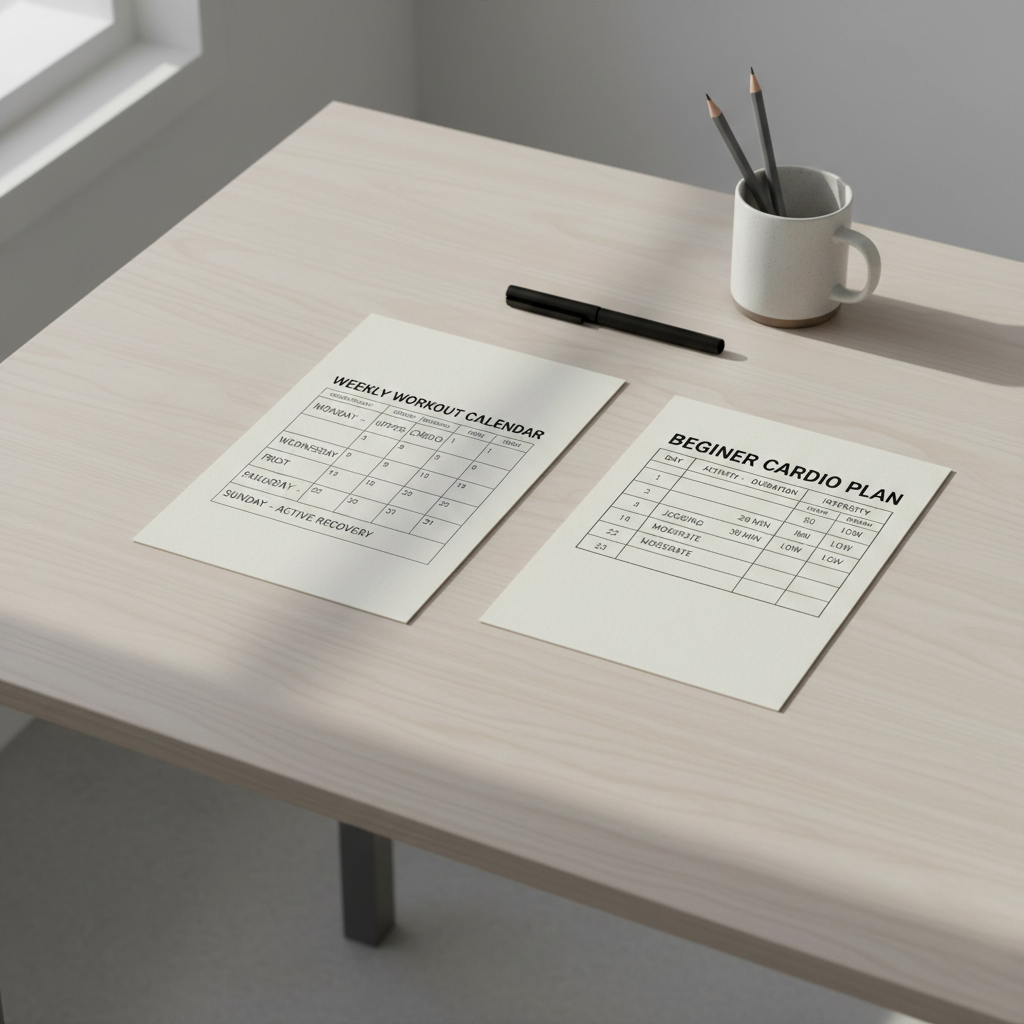
Weekly schedule (Weeks 1–4)
| Week | Days/Week | Easy Sessions | Build Session | Long Easy |
|---|---|---|---|---|
| 1 | 3 | 2 x 15–20 min | 1 x 15 min (gentle) | — |
| 2 | 3–4 | 2 x 20 min | 1 x 18–20 min | Optional 25 min (easy) |
| 3 | 4 | 2 x 20–25 min | 1 x 20–22 min | 1 x 30 min (easy) |
| 4 | 4–5 | 2–3 x 25 min | 1 x 22–25 min | 1 x 35 min (easy) |
How to run each workout (so it stays beginner-friendly)
- Warm-up: 5 minutes very easy, then gradually increase to your working pace.
- Main work: stay mostly in “I can talk” territory.
- Cool-down: 3–5 minutes easy, especially if you feel lightheaded when stopping quickly.
Build Session template (low drama, high payoff)
Keep it controlled. You’re nudging fitness upward, not proving toughness.
- 5 min easy warm-up
- 6 rounds: 1 min “comfortably hard” + 2 min easy
- 3–5 min cool-down
If that feels like too much, cut it to 4 rounds. If it feels too easy by Week 4, make the “comfortably hard” minute slightly faster, not all-out.
Mode choices: pick what your body tolerates
People new to fitness often assume “cardio = running.” Running can work, but low-impact options are often the easiest way to stay consistent.
- Walking (outdoors or treadmill): underrated, scalable, easy to recover from.
- Cycling: joint-friendly, good if you like clear effort levels.
- Elliptical: smooth on knees, easy to control intensity.
- Swimming: great for many people, though access and technique can be the barrier.
If you do want to run, consider a walk-run approach once brisk walking feels easy. Many beginners progress better with patience than with willpower.
Practical tips that make the plan stick
This is where most plans quietly fail: not in workout design, but in execution on messy weeks.
Key points to remember
- Leave one rep in the tank: finishing slightly fresh improves next-week consistency.
- Minimum viable workout: if time collapses, do 10 minutes easy instead of skipping.
- Progress one thing at a time: add minutes or add days, not both in the same week.
- Use a simple metric: minutes per week plus a 1–10 effort rating works fine.

According to American Heart Association, regular aerobic activity supports heart health, and building the habit matters as much as any single “perfect” session. If you’re choosing between perfect and consistent, consistent wins almost every time.
Common mistakes (and what to do instead)
- Mistake: pushing every session hard.
Try: keep most workouts easy, make only one session per week a “build.” - Mistake: ignoring pain signals.
Try: distinguish normal muscle fatigue from sharp, localized pain, swap to lower-impact when needed. - Mistake: adding intensity to compensate for missed days.
Try: resume the plan, don’t “pay back” workouts. - Mistake: no recovery habits.
Try: sleep, hydration, and a short cool-down often reduce next-day stiffness.
When to get professional guidance
If you have cardiovascular, metabolic, or orthopedic conditions, or you’re returning after a long break, it’s reasonable to consult a clinician before increasing activity. Also get help sooner if you notice chest pain, fainting, unusual shortness of breath, or pain that changes your gait.
A qualified personal trainer can also help with pace control and movement choices, especially if you’re unsure about form on machines or you keep flaring up the same aches.
Conclusion: a beginner plan should feel almost “too doable”
A beginner cardio plan works when it’s boring in the right way: you finish sessions feeling steadier, your weekly minutes climb without drama, and you can see progress in how easy the same workout starts to feel.
If you want a clean next step, pick your cardio mode, schedule three sessions this week, and keep two of them truly easy. Then add minutes slowly. That’s the whole game.
FAQ
How many days a week should I do cardio as a beginner?
Three days per week works for many people starting out, because recovery stays manageable. If you feel good and sleep well, moving to four days can be a smooth upgrade.
Is walking enough for a beginner cardio plan?
Often, yes. Brisk walking builds aerobic capacity and consistency with low impact. If it stops feeling challenging, add minutes, gentle hills, or short “build” segments.
How do I know if I’m going too hard?
If you can’t speak a short sentence, you’re likely above an easy pace. Another clue is needing more than a day to feel normal again after routine sessions.
Should beginners do HIIT?
Many beginners do better with steady, conversational cardio for a few weeks, then add light intervals. HIIT can be effective, but it raises injury and burnout risk when your base is thin.
What’s the best time of day for cardio?
The best time is the one you’ll repeat. Morning can reduce decision fatigue, but evening works fine if it fits your energy and sleep routine.
Do I need a heart rate monitor?
Not required. The Talk Test and an effort rating are usually enough early on. If you enjoy data, a monitor can help you avoid accidentally turning easy days into hard days.
What if I miss a week?
Restart at a slightly easier version of the week you were on, then rebuild. Most people regain fitness quickly, but trying to “catch up” aggressively is where setbacks happen.
If you’re doing this on your own and you want something more plug-and-play, consider using a simple tracker or app that schedules sessions and nudges progression gently, it can reduce the mental load without turning every workout into a performance test.