Flexibility training is one of those habits you only miss when it’s gone, tight hips in the morning, a cranky lower back after sitting, shoulders that won’t settle down after workouts. A short daily routine can improve how your body feels and moves, without turning your living room into a yoga studio.
What most people get wrong is treating stretching like a random add-on. They do it only when they remember, push too hard, or copy a routine built for someone with totally different joints and history. The result is usually “I did stretches for a week, nothing changed,” or worse, a small tweak that makes them quit.
This guide gives you a practical daily plan, a quick self-check to pick the right intensity, and a few small “do this, not that” cues that tend to make the difference. If you already lift, run, or play sports, this routine also fits around training instead of fighting it.
What “daily” really means for flexibility
Daily does not have to mean long. For most bodies, 8–15 minutes most days beats one intense 45-minute stretching session on Sunday. You’re training your nervous system to tolerate range of motion, not just pulling on tissue.
Also, flexibility and mobility get mixed up. Flexibility is your ability to reach positions, mobility is your ability to control them. Many people need both, but if a position feels shaky, you usually want more controlled mobility work, not more aggressive stretching.
According to American Council on Exercise (ACE)... stretching tends to work best when muscles are warm and when you avoid bouncing, so think “gentle and steady,” especially at the start.
Why you feel tight (and why stretching sometimes doesn’t help)
“Tight” often means “guarded.” Your brain may limit motion when it senses instability, fatigue, or irritation in a joint. That’s why some people stretch hamstrings daily and still feel stuck.
- Sitting patterns: hips and ankles lose comfortable range when you spend hours in one position.
- Training load: heavy lifting, running mileage, or weekend sports can leave muscles feeling dense and protective.
- Stress and sleep: higher baseline tension can show up as neck, jaw, and shoulder stiffness.
- Joint-specific limits: sometimes bone shape, old injuries, or arthritis changes what “normal” range looks like.
So yes, flexibility training helps many situations, but the best routines include a little activation and control, not just passive holds.
Quick self-check: pick the right intensity today
Use this 60-second check before you start. It keeps you from turning a good habit into a strain.
- Green day: mild stiffness, no sharp pain, you feel better after moving around. Do the full routine.
- Yellow day: sore from training, cranky joints, stress tension in neck or hips. Keep holds shorter and add more gentle breathing.
- Red day: sharp pain, tingling, numbness, new swelling, or pain that worsens with light movement. Skip stretching that area and consider a clinician’s input.
A simple rule that works for most people: stretches should feel like a strong sensation, but not like a threat. If you can’t breathe normally, you’re probably pushing too far.
The daily flexibility training routine (10–15 minutes)
This is a balanced, joint-friendly sequence: warm-up, open common tight areas, then add a little control. Do it once a day, or 4–6 days per week if your schedule is hectic.
Step 1: Warm the system (2 minutes)
- March in place or brisk walk around the room: 60 seconds
- Arm circles (small to medium): 30 seconds each direction
If you already train, your warm-up may be done. In that case, jump to Step 2 right after your workout when you’re still warm.
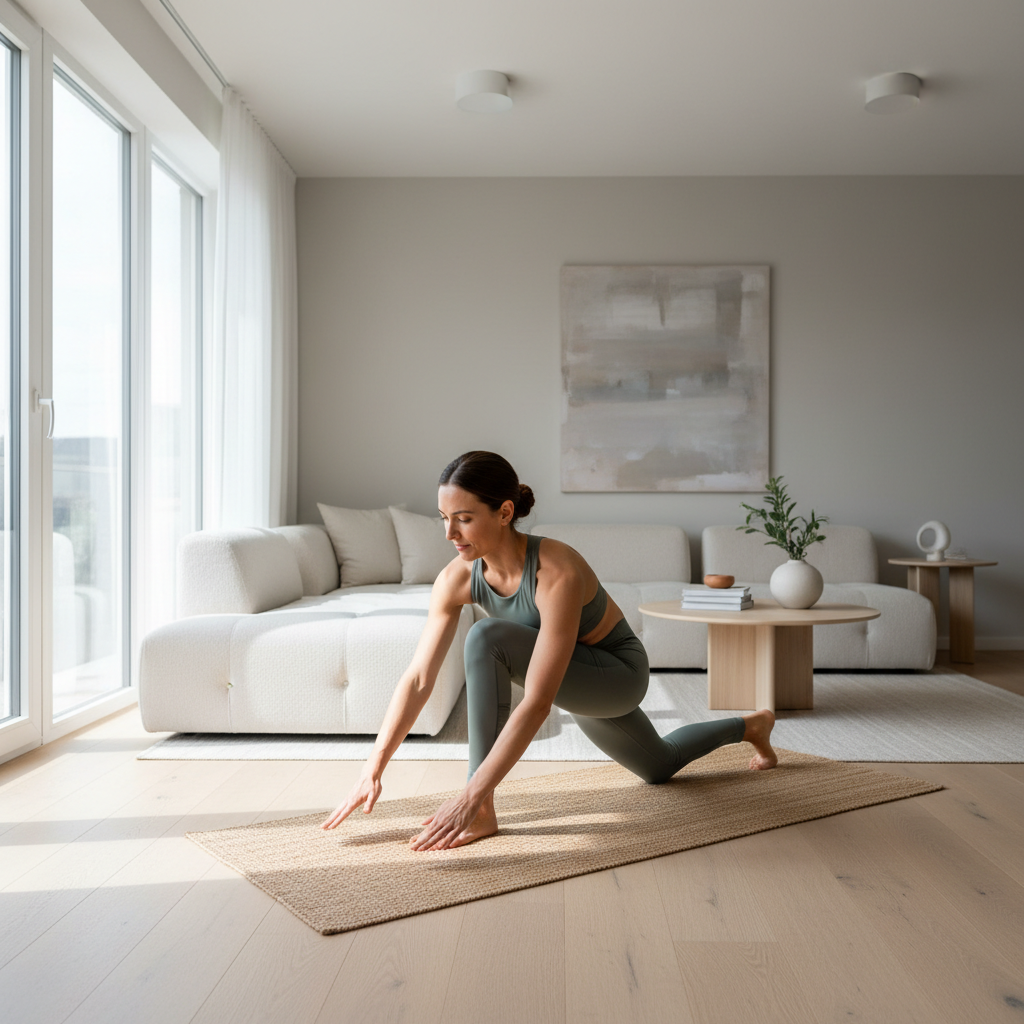
Step 2: Hip flexors + quads (2–3 minutes)
- Half-kneeling hip flexor stretch: 30–45 seconds per side
- Optional: reach the same-side arm overhead and slightly side-bend, slow breathing
Cue that helps: tuck your pelvis slightly as if you’re zipping up tight jeans, many people arch their low back and miss the hip entirely.
Step 3: Hamstrings (2 minutes)
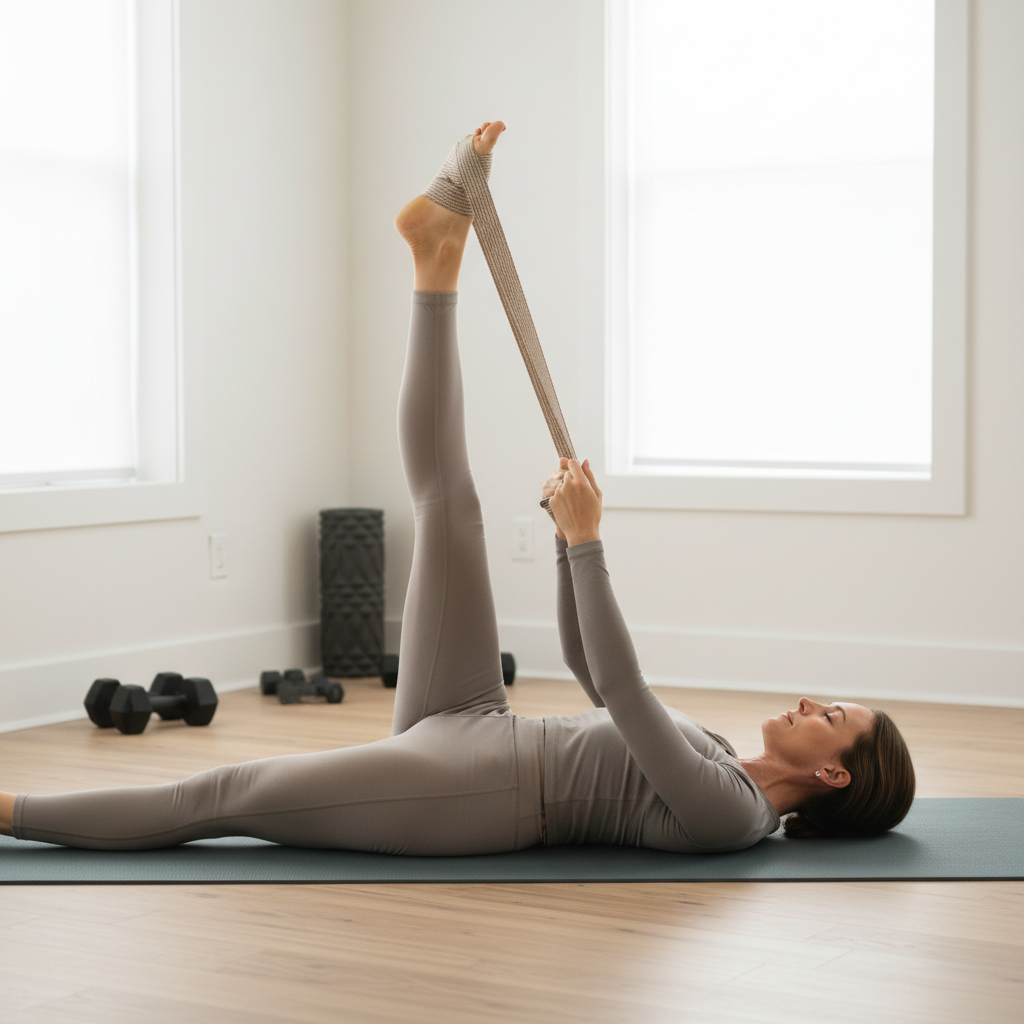
- Supine hamstring stretch with strap or towel: 30–45 seconds per side
Keep the opposite leg bent if your back complains. This is still flexibility training, not a test of toughness.
Step 4: Calves + ankles (2 minutes)
- Wall calf stretch (straight knee): 30 seconds per side
- Soleus stretch (slightly bent knee): 30 seconds per side
Ankles matter more than people think. Limited dorsiflexion often shows up as knee irritation, achy shins, or “why do my squats feel weird?”
Step 5: Thoracic spine + chest (2–3 minutes)
- Open book rotations: 6 slow reps per side
- Doorway pec stretch: 30 seconds per side
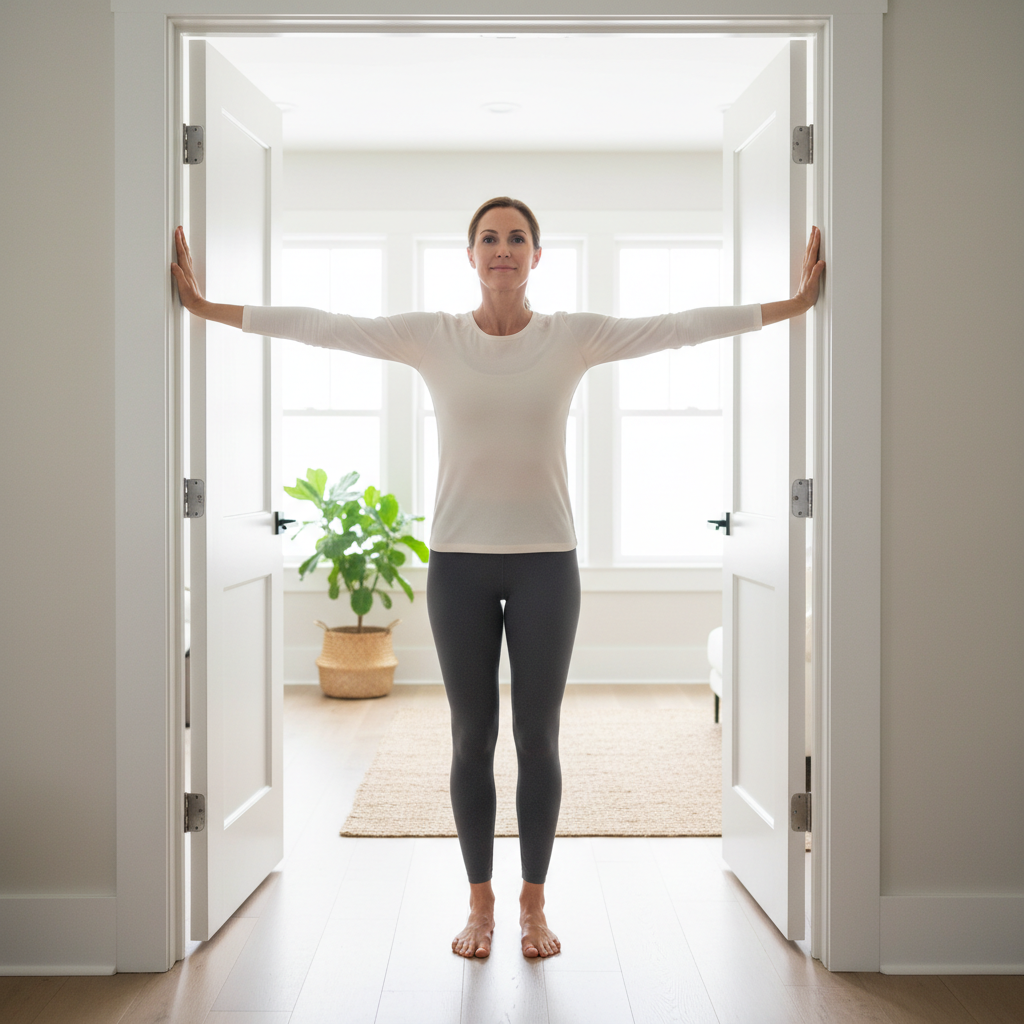
If your shoulders feel tight, this section often helps faster than stretching the shoulder itself, because the ribcage and upper back set the stage for shoulder motion.
Step 6: Add control (1–2 minutes)
- Glute bridge: 8–10 smooth reps
- Dead bug (easy version): 6 reps per side
This is the “keep the new range” piece. Without it, flexibility gains can feel temporary, especially around hips and low back.
Simple weekly plan (and how to place it around workouts)
Consistency wins, but the routine should match your training week. Here’s a practical template many people can tolerate.
| Day | When to do it | Intensity | Notes |
|---|---|---|---|
| Mon | After workout or evening | Moderate | Full routine |
| Tue | Morning reset | Easy | Shorten holds to 20–30 sec |
| Wed | After workout | Moderate | Full routine + extra ankles |
| Thu | Anytime | Easy | Focus hips + upper back |
| Fri | After workout | Moderate | Full routine |
| Sat | Before activity | Light | Keep holds brief, add movement |
| Sun | Off day | Optional | Walk + 8 minutes easy stretching |
If you lift heavy, longer static holds right before maximal sets may not feel great for performance. Many people prefer dynamic mobility pre-workout, then slower stretching after.
Technique cues that make stretching actually work
You can do the “right” stretch and still miss the target. These cues are small, but they’re the difference between a stretch you tolerate and a stretch that changes something.
- Breathe low and slow: inhale through your nose, long exhale, the exhale is usually when range opens up.
- Find the first barrier: stop at the point you feel resistance, then soften into it over 10–15 seconds.
- Avoid joint pinch: pinching in the front of the hip or shoulder often means adjust angle, not push harder.
- Use “2 out of 10” effort: you’re guiding tissue and nervous system, not forcing it.
According to National Academy of Sports Medicine (NASM)... stretching should be performed in a controlled manner and within a pain-free range, which lines up with what most coaches see in practice: calm reps beat aggressive holds.
Common mistakes (and what to do instead)
- Going too hard on day one → Keep your first week boring, aim for “I could do more,” not “I survived.”
- Stretching cold → Do 2 minutes of warm-up or a short walk, your body usually responds faster.
- Chasing numbness or tingling → Back off; nerve irritation is not a flexibility goal.
- Only stretching the “tight spot” → Add nearby joints, hips affect knees, upper back affects shoulders.
- No progression → Every 1–2 weeks, add 10 seconds per hold or one extra controlled rep, not both.
Flexibility training should feel like you’re practicing comfort in positions, not winning a fight with your body.
When to get professional help
If you run into any of these, it’s smart to pause the DIY approach and ask a licensed clinician or qualified coach to look at it, especially if you have prior injuries.
- Sharp pain in a joint during stretching
- Numbness, tingling, or radiating symptoms down an arm or leg
- Swelling, redness, or unexplained loss of range
- Back pain that worsens with basic movement or persists for weeks
According to Centers for Disease Control and Prevention (CDC)... adults benefit from safe, regular physical activity, and adjusting activity to your health status is part of staying safe, if something feels medically “off,” getting guidance early tends to beat guessing.
Key takeaways to keep on your phone
- 10–15 minutes most days usually beats one long weekly session.
- Warm up briefly, then stretch, then add a little control work.
- Use a discomfort scale, strong sensation is fine, sharp pain is not.
- If you feel stuck, adjust angles and breathing before adding intensity.
Conclusion: make it daily, make it easy to repeat
The best routine is the one you can repeat without bargaining with yourself. Put this flexibility training sequence next to something you already do, after brushing your teeth at night, after workouts, or right after your morning coffee, and keep the first week intentionally easy.
If you want a simple next step, start with four days this week, track one “win” like deeper squat comfort or easier overhead reach, then build to most days once your body trusts the process.
FAQ
How long does flexibility training take to show results?
Many people notice small changes in how they feel within 1–2 weeks, especially morning stiffness, but lasting range often takes longer. Consistency and gentle progression usually matter more than intensity.
Should I stretch before or after a workout?
Before training, most people do better with light dynamic mobility and brief holds. After training, longer static stretches often feel better because tissues are warm and you’re not about to lift heavy.
Is it okay to do flexibility work every day?
Often yes, if intensity stays moderate and you avoid painful ranges. If you feel more sore or “irritated” each day, reduce hold time and focus on breathing and control.
What if stretching makes my lower back hurt?
That usually means the stretch shifts into your back instead of the target area, common with hamstrings and hip flexors. Try changing the setup, bending the opposite knee, or shortening the range; if pain persists, consider professional evaluation.
Do I need yoga to improve flexibility?
No. Yoga can help, but flexibility training can be as simple as a few targeted stretches plus controlled movements. The best format is the one you’ll keep doing.
What’s the difference between mobility and flexibility?
Flexibility is reaching a position, mobility is controlling it. If you can “get there” but feel unstable, adding strength and control drills often helps more than longer holds.
Can beginners do this routine if they’re very stiff?
Usually yes, if they start with shorter holds, use props like straps, and avoid forcing range. When in doubt, staying in a comfortable range and progressing slowly is the safer bet.
If you’re trying to build a routine you can actually stick with, it may help to treat this like brushing your teeth, quick, predictable, no heroics, and adjust it around your training days rather than chasing the perfect plan.