Beginner daily yoga works best when it feels doable, not heroic, and a 20-minute routine is usually the sweet spot for building consistency without burning out. If you’re new, the goal isn’t fancy poses, it’s learning alignment basics, breathing, and how to move without aggravating wrists, knees, or lower back.
What makes this worth caring about is simple: a short practice you actually repeat tends to beat an occasional long class you dread. Most beginners don’t quit because yoga “doesn’t work”, they quit because the sequence feels confusing, too intense, or hard to fit into real life.
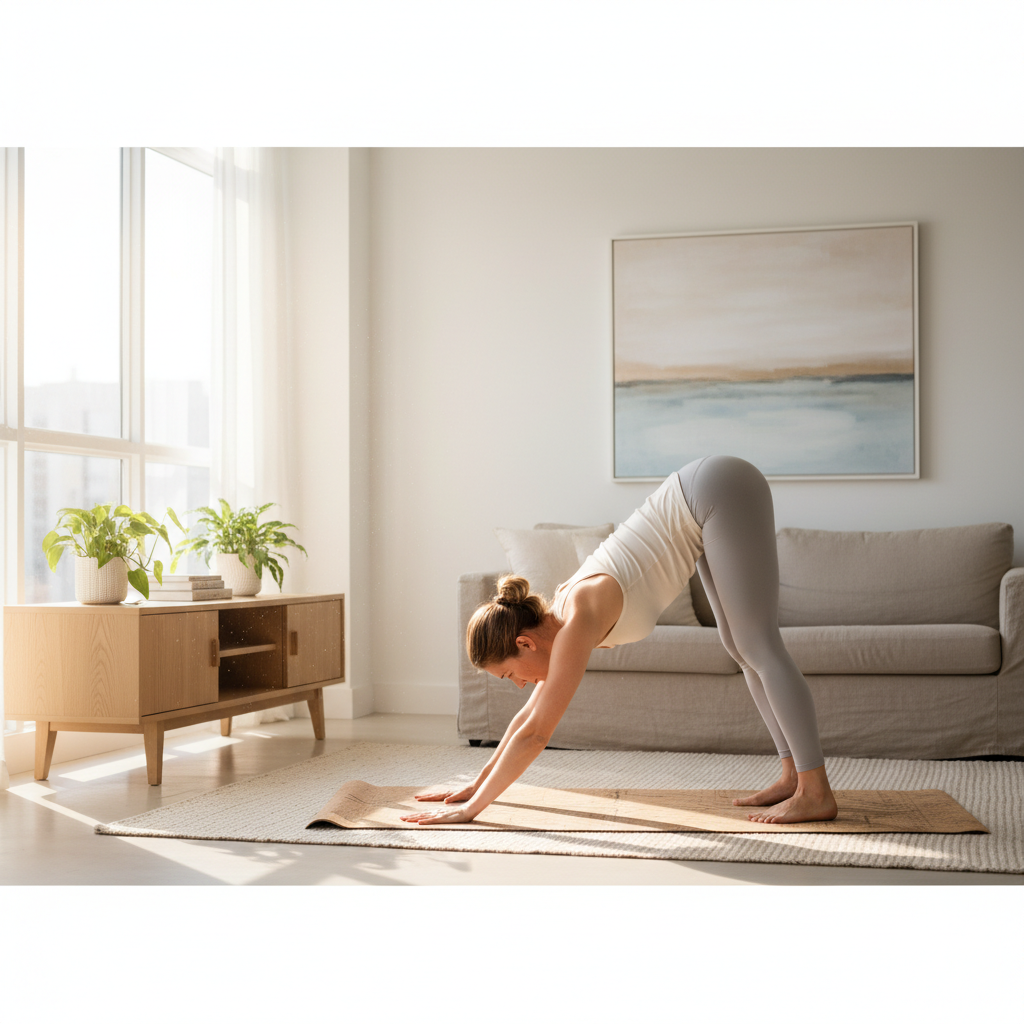
This guide gives you a repeatable 20-minute flow, plus a quick self-check so you can pick the right intensity on any day. You’ll also get modifications, common form mistakes to avoid, and clear “stop and reassess” signals for safety.
Why a 20-minute daily practice works for beginners
Twenty minutes is long enough to warm tissues and build skill, but short enough to feel realistic before work or after dinner. In many cases, the “daily” part matters more than the exact sequence because your body learns patterns through repetition.
- Consistency beats complexity: repeating a simple flow helps you recognize what good alignment feels like.
- Lower injury risk: shorter sessions reduce the temptation to push deep into stretches when you’re tired.
- Better stress control: even brief breathing-focused movement can help you downshift.
- Clear progress signals: you’ll notice changes in balance, breath steadiness, and stiffness over 2–4 weeks.
According to the National Center for Complementary and Integrative Health (NCCIH), yoga may help support overall wellness such as stress management, sleep, and flexibility, though results vary and it’s not a substitute for medical care.
Quick self-check: pick the right “version” for today
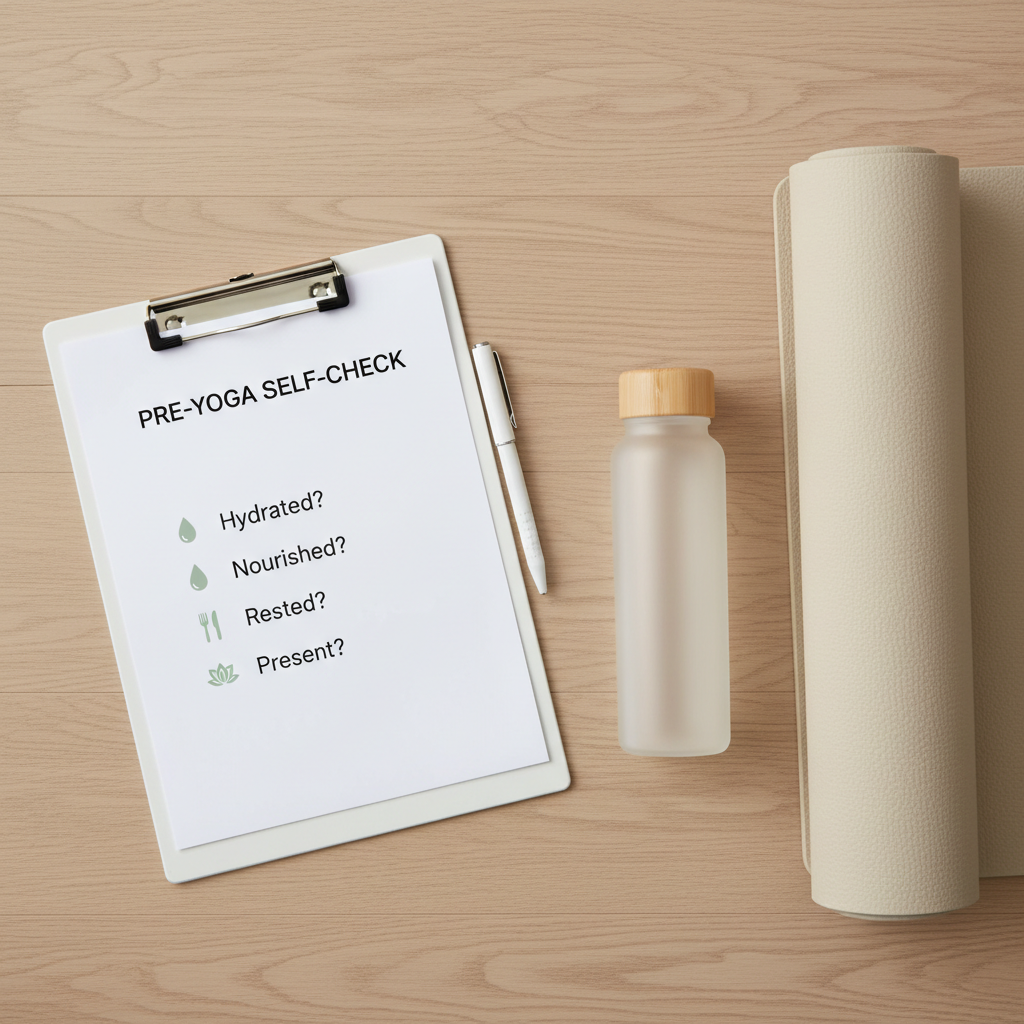
Before you start, take 30 seconds. This prevents the classic beginner mistake: trying to practice like it’s always your “best day.” Choose one track.
- Green light: you feel steady, no sharp pain, you can breathe through nose comfortably.
- Yellow light: tight lower back/hips, stiff neck, mild soreness, low sleep. Go gentle and shorter holds.
- Red light: sharp pain, dizziness, numbness/tingling, recent injury flare-up. Skip the flow and do breathing + rest, and consider consulting a clinician or a qualified yoga professional.
Key point: discomfort from effort or mild stretching can be normal, but sharp, pinching, or electric sensations are not a “work through it” situation.
The 20-minute beginner daily yoga sequence (with timing)
Use this as your base routine. Move slowly, keep breathing, and treat transitions as part of the practice. If you’re unsure, take the gentler option and build up over time.
Minute 0–2: Arrive and breathe
- Easy Seat or Chair: sit tall, shoulders soften.
- Breath: inhale 4 counts, exhale 6 counts, repeat 6–8 rounds.
Minute 2–6: Warm-up (spine and hips)
- Cat-Cow (Tabletop): 6–8 slow rounds.
- Thread the Needle: 3 breaths each side, keep it light.
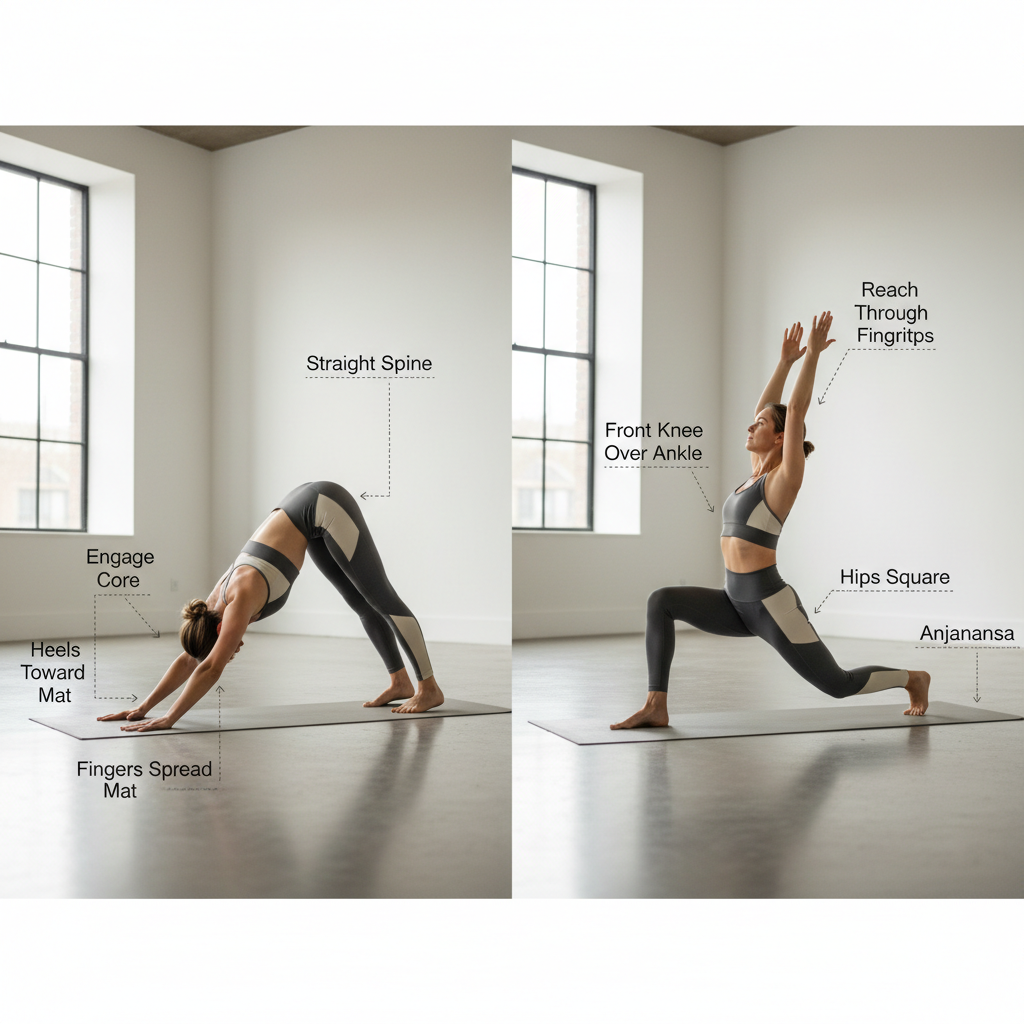
- Low Lunge (Anjaneyasana) prep: step one foot forward, hands on blocks or thighs, 3 breaths each side.
Minute 6–14: Simple strength + mobility flow
- Downward Dog (gentle): 3 breaths, bend knees as needed.
- Half Sun Salutation: 3 rounds, slow pace.
- Warrior I to Warrior II: 2 breaths each, each side.
- Side Angle (forearm to thigh): 2 breaths each side.
Minute 14–18: Cool down (hips + hamstrings)
- Seated Forward Fold (soft knees): 4–6 breaths.
- Figure-4 stretch (on back): 4 breaths each side.
Minute 18–20: Rest
- Savasana or Constructive Rest: breathe naturally, let the jaw unclench.
If you want a small challenge without adding time, slow your transitions and keep your breath smooth, that usually raises intensity safely.
Form cues that keep beginners safer (and more comfortable)
Most “yoga pain” in early practice comes from a few predictable spots. These cues fix a lot without turning practice into a geometry exam.
- Wrists in Down Dog: spread fingers, press knuckles, shift a little weight back toward hips. If wrists complain, use forearms on a couch or do a shorter hold.
- Lower back in folds: bend knees and fold from hips, not by yanking spine into a curve.
- Knees in lunges/warriors: keep knee tracking over middle toes, avoid collapsing inward.
- Neck: don’t “look up” by compressing back of neck, keep gaze soft and neutral.
According to the American Council on Exercise (ACE), proper technique and gradual progression matter when starting any new movement practice, especially when flexibility changes faster than strength.
Quick reality check: flexibility can improve quickly, but tendons and stabilizing muscles often lag behind, so “deeper” isn’t always “better,” especially in the first month.
Common beginner mistakes (and what to do instead)
These show up constantly in beginner daily yoga, and they’re fixable without overthinking.
- Mistake: holding breath during effort. Instead: reduce intensity until you can breathe steadily.
- Mistake: rushing Sun Salutations. Instead: move one breath per motion, pause when messy.
- Mistake: pushing into sharp sensation. Instead: back off to a “strong stretch” you can relax into.
- Mistake: skipping rest. Instead: treat the final 2 minutes as part of the practice, not optional.
If you notice you’re always sore, it may be too much intensity too soon. Swap one standing pose block for more floor work for a week, then reassess.
Make it daily: simple planning that actually sticks
Motivation comes and goes, so set this up like a habit, not a personality test. Pick a time, reduce friction, keep expectations boring.
- Choose a trigger: after brushing teeth, after coffee brews, or right after shutting down your laptop.
- Make the mat visible: stored gear becomes a negotiation.
- Use a minimum: “I do 5 minutes no matter what,” then continue if you want.
- Track lightly: a simple calendar check mark beats a complex app you avoid.
Modifications and props: quick table for common limits
You don’t need props, but they help many beginners practice with better form. A folded blanket, a belt, or two sturdy books can work if you don’t have blocks or a strap.
| Situation | Try this modification | Why it helps |
|---|---|---|
| Tight hamstrings in folds | Bend knees, hands to shins or blocks | Protects lower back, builds hinge pattern |
| Wrist discomfort in Down Dog | Hands on a wall/couch, or shorten holds | Reduces load while keeping shoulder work |
| Knee sensitivity in lunges | Add a folded blanket under back knee | Less pressure, easier to relax hips |
| Balance feels shaky | Widen stance, practice near a wall | Stability first, confidence follows |
| Low back feels “pinchy” | Shorten stance in Warrior I, soften ribs | Less compression, better core support |
When to get professional help (and what to look for)
If you have a medical condition, are pregnant, or deal with recurring pain, it’s smart to consult a healthcare professional before changing activity. Also consider working with a qualified yoga instructor if any of these sound familiar:
- pain that sharpens during specific poses, or lingers and worsens afterward
- numbness, tingling, radiating symptoms, or joint instability
- you feel confused about alignment and keep “guessing” in weight-bearing poses
- you want a plan adapted for scoliosis, disc issues, or prior surgeries
A good teacher will ask questions, offer options, and encourage you to back off without making it feel like failure.
Conclusion: keep it simple, keep it repeatable
A 20-minute routine only works if it stays approachable, so let “easy enough to repeat” be your standard. If you do this flow most days for two weeks, you’ll usually notice less stiffness and better body awareness, and that’s a solid win.
Action steps: pick your practice time for the next 7 days, then commit to the minimum version on busy days so your habit stays intact.
FAQ
Is beginner daily yoga safe to do every day?
For many people, gentle yoga can fit daily, especially when you vary intensity and respect pain signals. If you’re dealing with injury, chronic pain, or a medical condition, it’s safer to get guidance from a clinician or qualified instructor.
What time of day is best for a 20-minute yoga routine?
Whichever time you can repeat. Mornings often feel great for stiffness, evenings can help you downshift, but consistency typically matters more than the clock.
Do I need to sweat for yoga to “count”?
No. Some sessions are heat-and-strength focused, others are mobility and breathing. If you finish feeling more steady and less tense, that session did its job.
What if I can’t do Downward Dog comfortably yet?
Use a wall or couch version and keep the hold short. Many beginners build shoulder and hamstring tolerance over time, and forcing it early tends to irritate wrists or lower back.
How fast should I expect flexibility improvements?
Often you’ll feel changes in comfort within a couple weeks, but the pace varies by age, activity history, and stress levels. Prioritize control and ease, flexibility usually follows.
Should beginners do Sun Salutations every day?
You can, but keep them slow and clean. If your shoulders or wrists feel cranky, reduce rounds, swap in more floor-based warm-ups, and rebuild gradually.
What equipment helps the most for beginners?
A non-slip mat is the main one. Blocks and a strap make alignment more accessible, especially for tight hips and hamstrings, but you can improvise with books and a belt.
If you’re trying to make beginner daily yoga feel less confusing, it can help to follow a simple weekly plan with clear modifications, or work with a teacher who can adjust cues to your body and your space so you spend less time guessing.