
Home use treadmill shopping gets tricky fast when you live in a smaller apartment or a tight home gym corner, because the “compact” label often hides the real problem: footprint, noise, and where the thing actually goes when you finish a workout.
The good news is you can absolutely find a treadmill that fits a small space without settling for a wobbly deck or a motor that sounds like a blender. The trick is knowing which specs matter for tight rooms, and which “space-saving” features are mostly marketing.
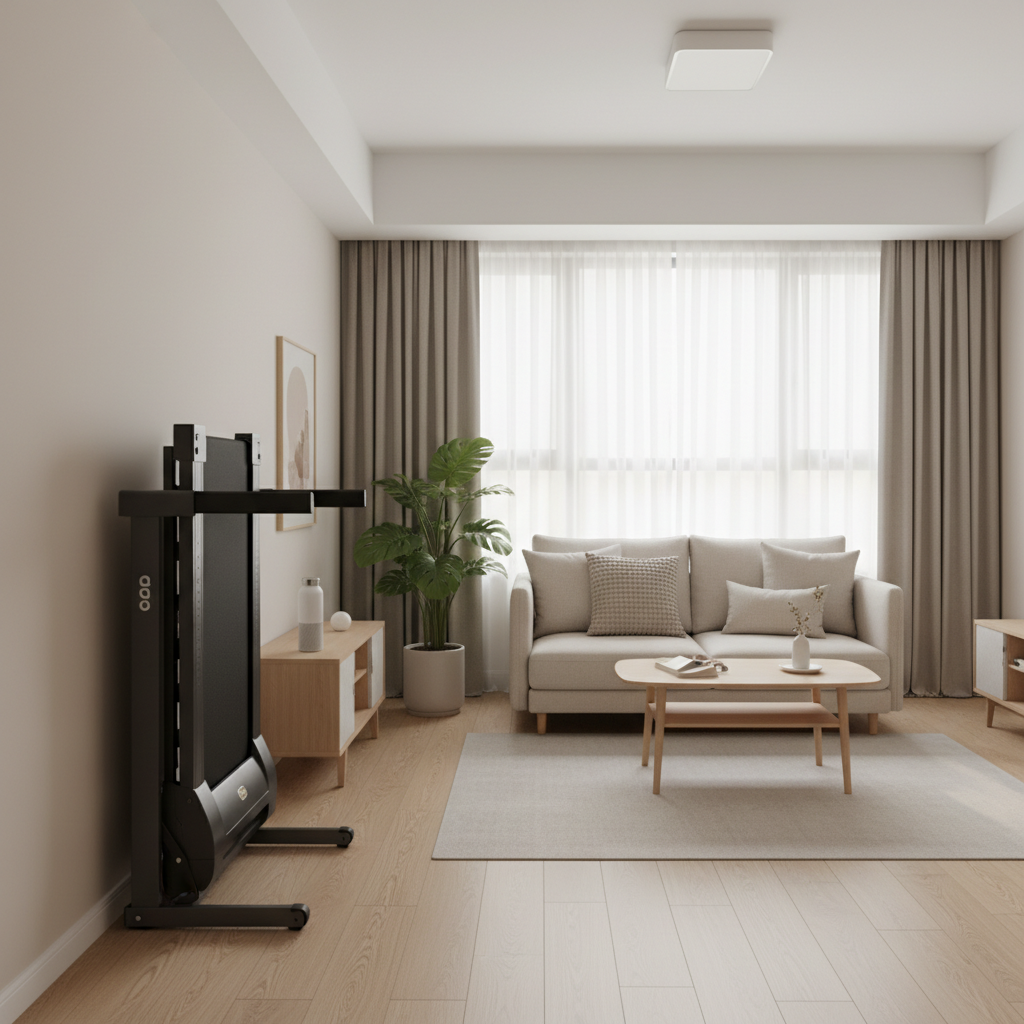
This guide breaks down what to measure, which features make a real difference in small homes, a quick decision checklist, and a short list of “don’t buy it for small spaces” red flags. I’ll also share a comparison table you can use while browsing.
What “small-space friendly” really means for a treadmill
In small homes, you’re not just managing floor space, you’re managing daily friction. If setup takes effort, many people stop using it. So “fits” should include storage, moving, and noise.
- Usable footprint: The space you need while walking or running, plus safety clearance behind the belt.
- Storage footprint: The space it takes when folded upright or slid under a bed or sofa.
- Move-and-park effort: Weight, wheel quality, and whether one person can reposition it without scraping floors.
- Noise profile: Motor noise plus footfall vibration, which matters more in apartments and upstairs rooms.
According to CDC guidance on physical activity, consistent movement matters more than perfect workouts, so your “best” option is often the one you’ll actually use three or four times a week.
Measure first: the 5 numbers that prevent returns
Before you compare motors and screens, measure. People usually guess, and that guess gets expensive.
1) Floor area where it will live
- Measure width and length where the treadmill sits during workouts.
- Check nearby doors, drawers, and HVAC vents that need clearance.
2) Ceiling height
If you plan to run, ceiling height becomes real. Combine your height, treadmill deck height, and a little bounce room. If you feel unsure, it’s smart to test a similar deck height at a store or consult a trainer.
3) Folded height (for upright folding models)
A treadmill that folds can still be too tall for a low closet or a tight wall nook. If it blocks art, shelves, or windows, it often becomes annoying fast.
4) Under-furniture clearance (for under-desk/walking pads)
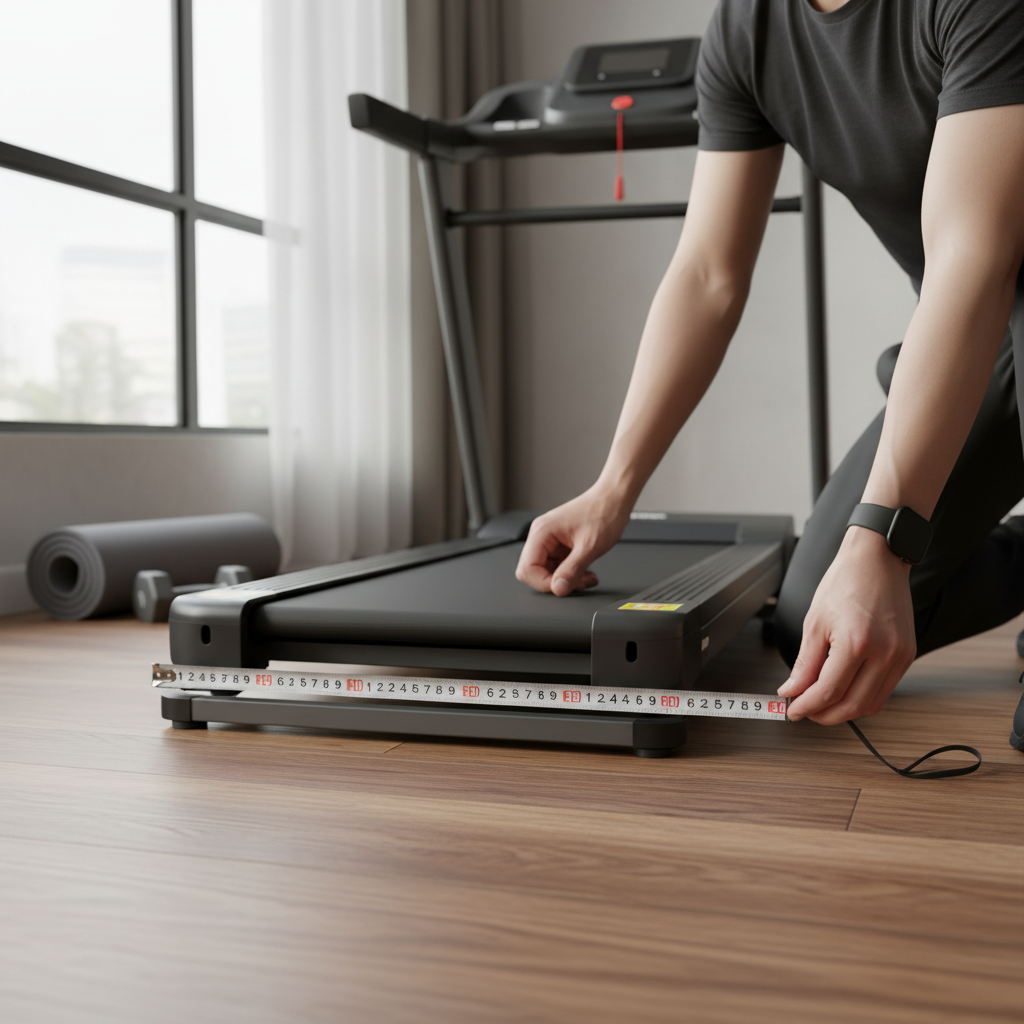
If you want an under-bed or under-sofa solution, measure clearance and remember some units sit higher once you add a mat.
5) Pathway width for delivery and moving
Hallways, elevators, tight turns, and stairs matter. Some “small” treadmills arrive in long boxes that still need space to maneuver.
Key features that matter most in small home spaces
Here’s where to focus your budget. A feature can be “nice,” but small spaces punish weak fundamentals.
- Folding type: Upright folding saves floor space; flat folding or “walking pad” style saves storage space.
- Deck stability: A shaky deck feels worse in tight rooms because you’re close to walls and furniture.
- Motor behavior at low speeds: Many people use a home use treadmill for brisk walking; low-speed smoothness matters.
- Noise + vibration control: Look for cushioning and a heavier, stable frame; add a dense treadmill mat on hard floors.
- Handrail and safety features: Especially if balance is a concern; don’t “optimize for slim” and lose basic safety.
- Controls you can use mid-stride: Big buttons beat tiny touch controls when you’re moving.
According to OSHA, walking-working surfaces and housekeeping reduce slip and trip risks. Translating that to a home setup: keep the treadmill zone clear, avoid power cords across walk paths, and don’t store it where it blocks an exit route.
Quick comparison table: choose the right style for your space
Use this table to narrow your search before you start comparing brands and screens.
| Type | Best for | Main trade-offs | What to check |
|---|---|---|---|
| Upright folding treadmill | Small rooms with open wall space | Folded height can be bulky, still heavy to move | Folded dimensions, hydraulic assist, wheel quality |
| Flat-fold / low-profile treadmill | Storing under a bed or couch | Often smaller running deck, fewer incline options | Under-furniture clearance, deck length, max user weight |
| Under-desk walking pad | Walking while working, tightest spaces | Not ideal for running, usually lighter build | Low-speed smoothness, remote reliability, belt tracking |
| Compact non-folding treadmill | Dedicated corner where it can stay put | Takes permanent floor space | Overall footprint, noise levels, stability at speed |
Self-check: which small-space buyer are you?
Most people fall into one of these scenarios. Pick yours and you’ll avoid “feature shopping” that doesn’t match real life.
- I need it to disappear: Prioritize low-profile storage, lighter weight, and easy rolling. Flat-fold or walking pad tends to win.
- I can give it a corner, but not a whole room: Upright folding models usually make sense, especially if you’ll use incline.
- I’m worried about neighbors: Focus on stability, cushioning, and a mat; avoid ultra-light frames that transmit vibration.
- I want to run, not just walk: Don’t shrink the deck too far; a too-short deck forces awkward stride adjustments.
Key takeaway: small-space success is less about the smallest footprint on a product page, more about whether setup feels effortless on a normal Tuesday.
Practical buying steps (what to do in 30 minutes)
If you want a clean, repeatable way to choose a home use treadmill without going down a review rabbit hole, do this.
Step 1: Write your non-negotiables
- Walking only vs jog/run
- Max storage height or under-bed clearance
- Noise tolerance: “apartment quiet” vs “basement OK”
Step 2: Filter by dimensions, not marketing terms
Search retailers by folded length/height when possible. If a listing hides folded dimensions, treat it as a yellow flag.
Step 3: Check the deck length and weight capacity
For small treadmills, deck length often shrinks first. If you’re tall or have a longer stride, this matters more than extra app features. Capacity also correlates with frame sturdiness, though it’s not a perfect proxy.
Step 4: Plan your noise strategy
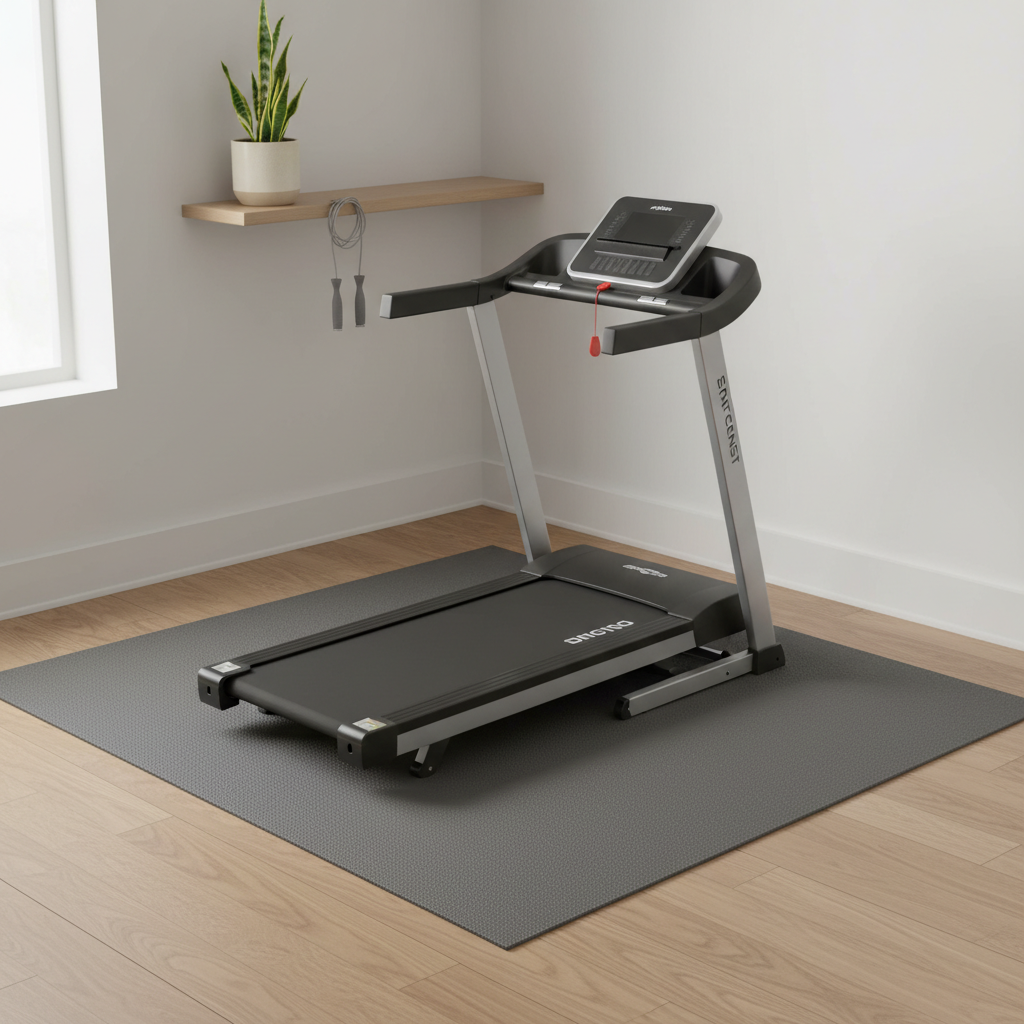
- Add a dense treadmill mat on hard floors to reduce vibration transfer.
- Place it away from shared walls when possible.
- Maintain the belt; a dry belt can squeak and strain the motor.
Step 5: Confirm the return policy and in-home setup reality
Small spaces make returns harder, not easier. Check box size, restocking fees, and whether you’ll need a second person to move it.
Common mistakes to avoid (small spaces punish these)
- Buying for incline you never use: If incline forces a bulkier frame, it may not be worth the trade-off for your space.
- Ignoring handrail height and reach: Especially for beginners, awkward handrails can feel unsafe.
- Assuming “lightweight” means “easy”: Very light units can slide, shake, and amplify footfall vibration.
- Skipping maintenance because it’s “just walking”: Basic belt alignment and lubrication reduce noise and wear.
- Forgetting where the power cord goes: Cords across a walkway become a daily hazard.
According to the U.S. Consumer Product Safety Commission (CPSC), home exercise equipment can pose injury risks, especially for children. If kids or pets share your space, consider models with safety keys, and store it in a way that limits unsupervised access.
When to get professional input
If you have joint pain, balance issues, or a heart condition, the treadmill choice can affect comfort and safety. In those cases, it’s reasonable to ask a physical therapist or qualified fitness professional what deck firmness, speed range, and handrail setup fit your needs.
If your building has strict noise rules, it can also be worth asking management about quiet hours and flooring guidelines, because even a good home use treadmill can trigger complaints if the structure transmits vibration.
Conclusion: a small-space treadmill should reduce friction, not add it
The best treadmill for a small home space is usually the one that fits your storage reality, stays stable at your actual pace, and doesn’t create a noise problem you spend weeks trying to fix. Measure first, pick the right style, then spend your budget on stability and usability before fancy extras.
If you want a simple next step, choose one storage style, set a hard limit on folded dimensions, and only compare models that meet those numbers. That single move saves time and buyer’s remorse.
FAQ
What is the best home use treadmill for a small apartment?
Usually it’s a low-noise, stable unit with a folding or low-profile design that matches how you’ll store it. Apartments tend to make vibration control more important than maximum speed.
Is a walking pad enough if I want to lose weight?
It can be, especially if it helps you walk more consistently. Weight change depends on overall activity and diet, so if you have medical concerns it’s smart to consult a healthcare professional before making big changes.
How much space should I leave behind a treadmill?
Many manufacturers recommend rear clearance for safety, but the exact number varies by model. If your room is tight, prioritize a shorter unit or change placement rather than squeezing it against a wall.
Are foldable treadmills less stable?
Not always. Some folding designs feel very solid, but compact models with lighter frames can wobble at higher speeds. Checking user weight ratings and frame design details helps more than the “foldable” label.
How do I make my treadmill quieter for neighbors?
Start with a dense mat, confirm the treadmill sits level, and keep the belt maintained. If you’re above someone’s bedroom, relocating it a few feet can make a surprising difference.
Should I prioritize motor power or deck size in a small treadmill?
If you plan to run, deck size and stability often feel more “make or break.” For walking, smooth low-speed operation and quiet performance can matter more than peak power specs.
What’s a realistic budget for a compact treadmill that lasts?
Prices vary a lot by features and build quality. In many cases, paying more for a sturdier frame and better warranty beats paying for a bigger screen in a small-space setup.
If you’re trying to choose a home use treadmill and you want a quick short list based on your room measurements, walking vs running goals, and noise constraints, a simple spec-based shortlist can save you hours and cut the risk of a return.