
A home exercise bike can absolutely work in a small apartment, but only if you shop with the right measurements and a realistic idea of how you’ll use it day to day.
Most people get stuck on one thing: they want “compact,” but they don’t define what compact means in their room. Is it a bike that stores upright, one that rolls into a closet, or one that stays out and still looks decent next to your couch? Those are different buys.
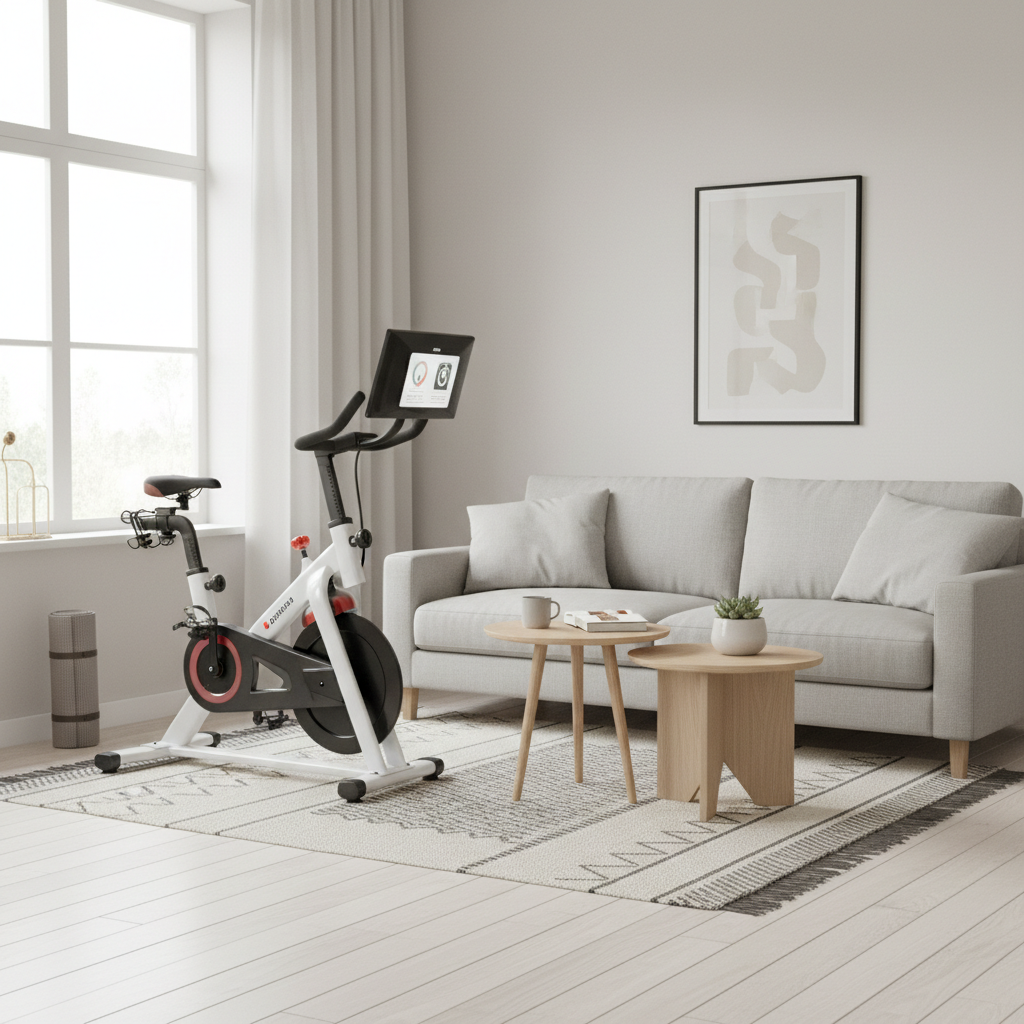
This guide breaks down the main small-space bike types, what specs actually matter, and a few practical setup tricks so you don’t end up with a bulky machine you avoid.
What “small-space friendly” really means (beyond footprint)
The footprint matters, sure, but small spaces punish the details you can ignore in a garage gym. Here’s what typically makes or breaks the experience.
- True in-use dimensions: Many bikes look narrow, then you add handlebar reach, elbow room, and back clearance for rocking during harder efforts.
- Entry/exit clearance: Step-through frames help when your bike lives between furniture pieces.
- Storage plan: Foldable means nothing if it still weighs a ton, or if folding takes two minutes and a bad mood.
- Noise and vibration: Magnetic resistance tends to run quieter than friction systems, which matters for neighbors and sleeping kids.
- Power and connectivity: Some bikes need a nearby outlet, others run on batteries. If your only outlet is behind the couch, plan early.
According to ACSM (American College of Sports Medicine), cardiorespiratory training supports overall health, and bikes are a joint-friendly way to do it for many people. The small-space angle is mostly about reducing friction so you ride consistently.
The best types of exercise bikes for small spaces
You can find a home exercise bike in almost any size category, but these styles show up most often in tight rooms.
1) Folding upright bikes
These are the classic “I’ll fold it and slide it away” option. When they’re good, they’re great for light to moderate riding and quick storage.
- Best for: casual rides, rehab-style pedaling, saving floor space between sessions
- Watch-outs: seat comfort varies a lot, and some frames still stick out even when folded
2) Compact magnetic uprights (non-folding)
Counterintuitive, but many small-space riders prefer a compact, stable bike that stays assembled. Less wobble, fewer compromises, and you actually use it.
- Best for: steady workouts, shared households, riders who don’t want to fold/unfold
- Watch-outs: make sure it has transport wheels and a manageable front-to-back length
3) Slim indoor cycling bikes
These look like studio spin bikes, often with a heavier flywheel and a smaller footprint than you’d expect. They do need a bit more “sweat space” around them.
- Best for: interval training, higher intensity, riders who like a road-bike feel
- Watch-outs: noise depends on belt vs chain drive, and friction resistance can squeak over time
4) Under-desk pedal exercisers (mini bikes)
If your “space” is basically a desk corner, a mini pedal unit can be a realistic compromise. It’s not a full bike fit, but it can increase daily movement.
- Best for: very small spaces, light activity while working, older adults who want simple motion
- Watch-outs: limited resistance range and fewer posture options
Quick comparison table: pick the right small-space style
If you’re deciding fast, this table helps you match the bike category to your actual constraint.
| Bike type | Space advantage | Typical best use | Common compromise |
|---|---|---|---|
| Folding upright | Stores smaller between rides | Light to moderate cardio | Comfort and stability vary |
| Compact magnetic upright | Small footprint without folding | Consistent weekly training | Still needs a “parking spot” |
| Slim cycling (spin-style) | Narrow width, studio feel | Intervals, higher intensity | Needs clearance for standing rides |
| Under-desk pedal unit | Fits under desks and tables | Movement while seated | Not a full-body riding position |
Small-space buying checklist (what to measure and verify)
Before you buy, take five minutes and do this. It saves returns, and it keeps your living room from turning into a storage unit.
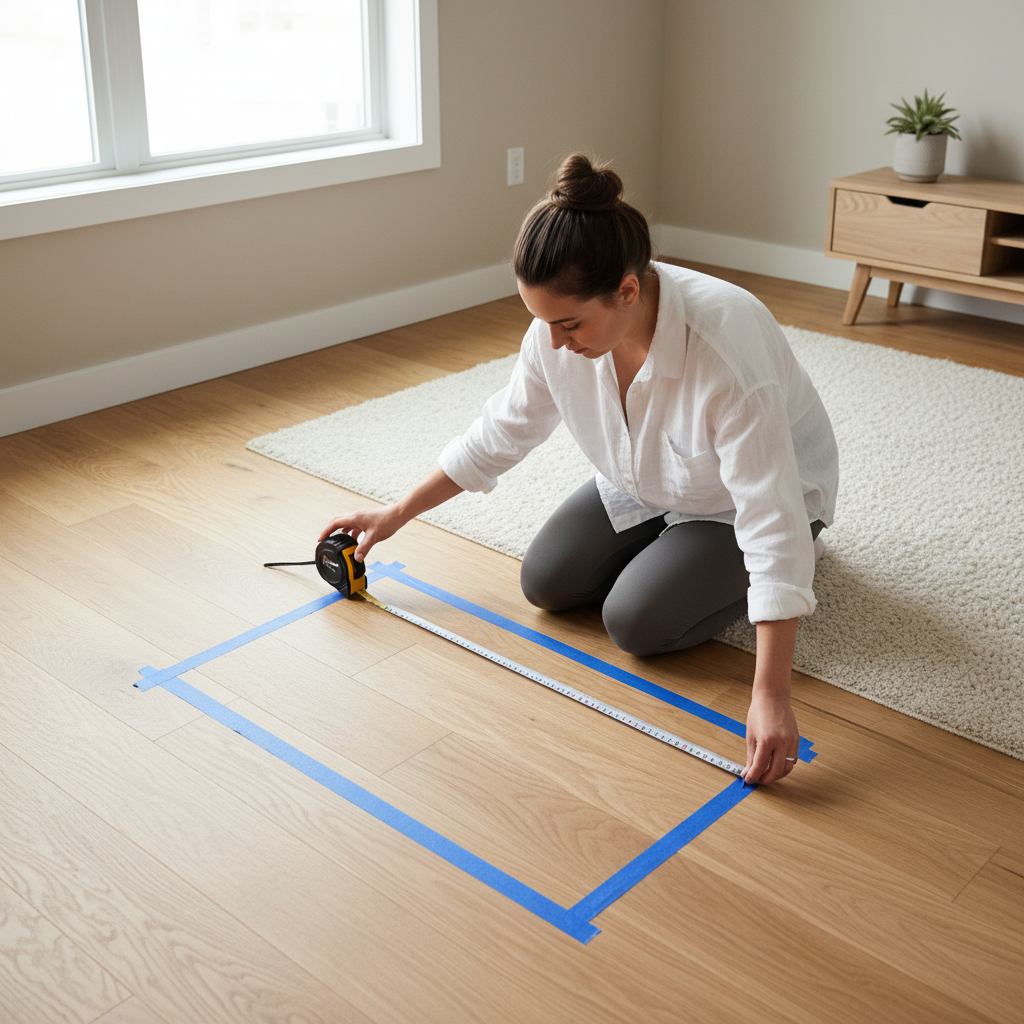
- Mark the footprint on the floor: painter’s tape works. Include an extra 6–12 inches where your knees and elbows move.
- Check ceiling height: if you’re tall or you plan to stand (cycling bike), low ceilings can feel cramped.
- Confirm seat height range: many compact models fit average heights well, but very short or tall riders should double-check.
- Look for transport wheels: in tight spaces, rolling beats lifting.
- Noise expectations: if you share walls, prioritize magnetic resistance and a belt drive when possible.
- Max user weight and frame stability: not a moral issue, just engineering. A stable frame feels better and often lasts longer.
- Return policy and box size: small apartments make “giant box logistics” a real pain.
Practical setup tips to make a bike work in a tiny home
Even a compact home exercise bike can feel intrusive if the setup isn’t thought through. These are the fixes that usually matter.
Put it on the right surface
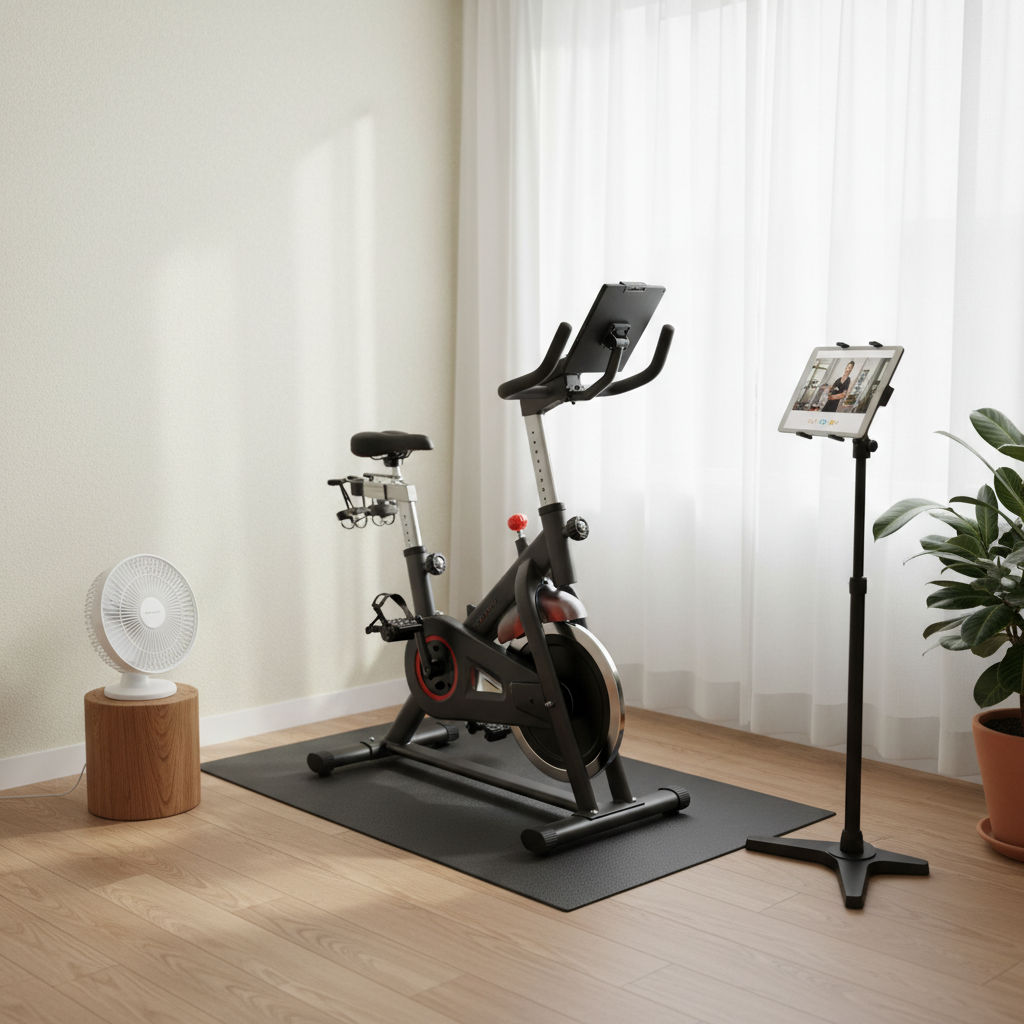
- Hard floors: use a mat to reduce vibration and protect the floor finish.
- Carpet: check for wobble, a dense equipment mat can stabilize the base.
Build a “ride station” so you don’t hunt for stuff
- Small side table or rolling cart for water, towel, remote
- Headphones hook, resistance band loop, cleaning wipes
- Fan placement that doesn’t blow directly into a neighbor-facing wall if noise complaints are a thing
Plan the screen situation
- No built-in screen: a tablet clamp or a small TV across the room keeps the bike footprint simpler.
- Built-in screen: verify Wi‑Fi strength where the bike will live, not where your couch sits.
Key points people miss (and regret later)
- “Foldable” isn’t always convenient: if you’ll dread folding it, you’ll stop using it.
- Seat comfort is not a small detail: budget bikes often need a better saddle or padded cover, especially for beginners.
- Resistance range matters more than you think: too easy becomes boring, too jumpy feels discouraging.
- Handlebar positions change everything: more positions help reduce wrist, shoulder, and neck irritation.
- Assembly space is part of the space: the bike might fit in the corner, but building it might require moving furniture for an hour.
According to CDC (Centers for Disease Control and Prevention), regular physical activity supports health in multiple ways. If riding causes pain beyond normal effort, or you have a medical condition, it’s smart to ask a clinician or qualified trainer how to modify intensity and fit.
Conclusion: the “best” small-space bike is the one you’ll actually ride
For most small homes, the best choice is less about trendy features and more about honest fit: measure the real usable space, pick a bike style that matches how you like to train, then set it up so starting a ride takes 30 seconds, not a whole reset of your room.
If you want a simple next step, tape out a footprint where you plan to keep the bike, then choose between a compact non-folding upright for convenience, or a slim cycling bike if you’re chasing sweatier workouts.
FAQ
- What size home exercise bike works best for a studio apartment?
Many people do well with a compact magnetic upright because it stays stable without needing a lot of side-to-side clearance. The key is confirming in-use length and leaving enough room to mount and dismount comfortably. - Is a folding bike worth it if I’ll use it four to five days a week?
Sometimes, but be honest about your routine. If folding feels like a chore, a small, rollable bike that lives in one spot often gets more consistent use. - How much clearance do I need around an exercise bike?
A common rule is at least several inches on each side plus extra room in front for handlebars and in back for safe stepping off. Taller riders and spin-style bikes usually need more clearance. - Are mini under-desk pedal exercisers “real workouts”?
They can raise daily activity, especially for beginners or people who sit for long hours. They usually won’t replace a full bike workout, but they can be a practical option when space is extremely limited. - What’s the quietest type of bike for apartment living?
Magnetic resistance models tend to be quieter, and a belt drive is often smoother than chain. Still, floors and mats matter, so test vibration control if neighbors live below you. - Do I need a bike with a screen to get good results?
No. Plenty of people ride with a phone, tablet, or TV across the room. A screen can help motivation, but consistency, comfort, and appropriate resistance matter more. - How do I know if bike discomfort is “normal” or a fit problem?
Mild muscle fatigue is expected, sharp pain or numbness is not. If adjusting saddle height and position doesn’t help, consider a different saddle, handlebar setup, or get guidance from a professional fitter or trainer.
If you’re trying to choose a home exercise bike and you only have one corner to spare, it helps to share your room measurements, your height range, and how often you realistically plan to ride, then narrow options based on fit and storage style instead of specs you won’t use.