
Creatine Guide questions usually boil down to three things: will it work for me, how do I take it without overthinking, and is it safe long-term. The good news is creatine is one of the most studied sports supplements, but the details still matter, especially if you have health conditions, take medications, or train inconsistently.
If you feel stuck between “loading phases,” influencer protocols, and scary forum side-effect stories, you’re not alone. Creatine is simple, yet it gets complicated fast when people mix up water weight with fat gain, or assume more scoops equals faster results.
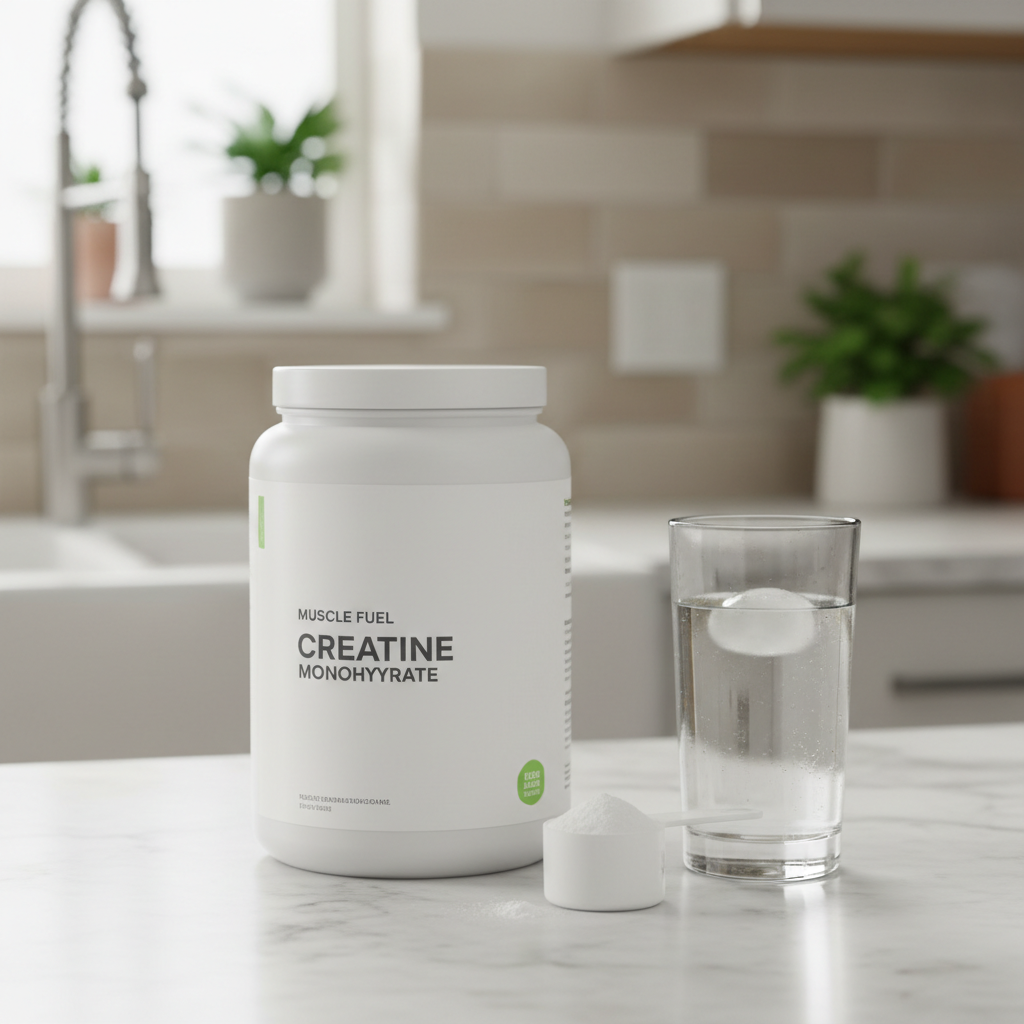
This guide focuses on what beginners in the U.S. typically need: what creatine does, how to pick a product, how to dose it, and what “normal” feels like in the first few weeks. You’ll also get a quick self-check list and a simple plan you can actually follow.
What creatine is (and what it actually does)
Creatine is a compound your body already stores, mostly in muscle, where it helps regenerate ATP, the quick energy source used for short, intense efforts like heavy sets, sprints, and repeated jumps. In plain English, higher muscle creatine stores can help you squeeze out more quality work in training, and that tends to translate to strength and muscle gains over time.
According to the International Society of Sports Nutrition (ISSN), creatine monohydrate is effective for improving exercise performance and increasing lean mass when combined with training. That “when combined” part is key: creatine supports training output, it doesn’t replace it.
Who benefits most (and who should pause and ask)
In many cases, creatine helps people doing resistance training, high-intensity interval work, or sports with repeated bursts. Beginners often notice better training volume, like getting an extra rep or keeping performance steadier across sets.
- Often a good fit: strength training beginners, recreational athletes, adults returning to lifting, people with plant-heavy diets (they may start with lower creatine stores).
- Benefits can feel smaller: endurance-only training, inconsistent workouts, very low overall protein/calorie intake.
- Pause and consult a clinician: kidney disease history, unexplained kidney lab abnormalities, pregnancy/breastfeeding, or if you’re on medications that affect kidney function (your prescriber should weigh in).

Also worth saying out loud: if your “workouts” are sporadic and sleep is a mess, creatine may still help, but it won’t be the bottleneck you think it is. Many people get more progress from consistent training, adequate protein, and hydration, then creatine becomes the small but reliable extra.
Picking a creatine product without getting upsold
For most beginners, creatine monohydrate is the default choice. It’s widely used, typically affordable, and the bulk of research focuses on it.
What to look for
- Form: creatine monohydrate (powder is usually the best value).
- Label simplicity: ideally one ingredient, fewer “proprietary blends.”
- Third-party testing: look for programs like NSF Certified for Sport or Informed Choice when possible, especially for competitive athletes.
- Mixability: micronized versions often dissolve a bit easier, though results are usually similar.
What you can ignore (most of the time)
- “Advanced” creatine types that cost significantly more, unless you have a specific reason and budget is not a concern.
- Overbuilt pre-workouts that hide creatine dosing inside a blend, which makes it hard to take a consistent daily amount.
How to take creatine: dosing, timing, and a simple beginner plan
If you want the low-drama approach, aim for a consistent daily dose and stop trying to time it perfectly. Many people do well with 3–5 grams per day. Some choose a loading phase to saturate stores faster, but it’s optional.
| Approach | Typical protocol | Why you’d pick it | Trade-offs |
|---|---|---|---|
| Steady daily | 3–5 g daily | Simple, easy on digestion | Takes a bit longer to fully saturate |
| Loading (optional) | ~20 g daily split into 4 doses for 5–7 days, then 3–5 g daily | Faster saturation for some people | More GI upset risk, more effort |
Timing: take it whenever you’ll remember. Post-workout with a meal works for many people, but consistency beats “perfect timing.” If it bothers your stomach, split the dose or take it with food.
Mixing: water is fine, a shake is fine, even coffee is usually fine for most people, though sensitivity varies. The bigger issue is hydration: creatine can increase water stored in muscle, so staying on top of fluids often makes the first weeks feel smoother.
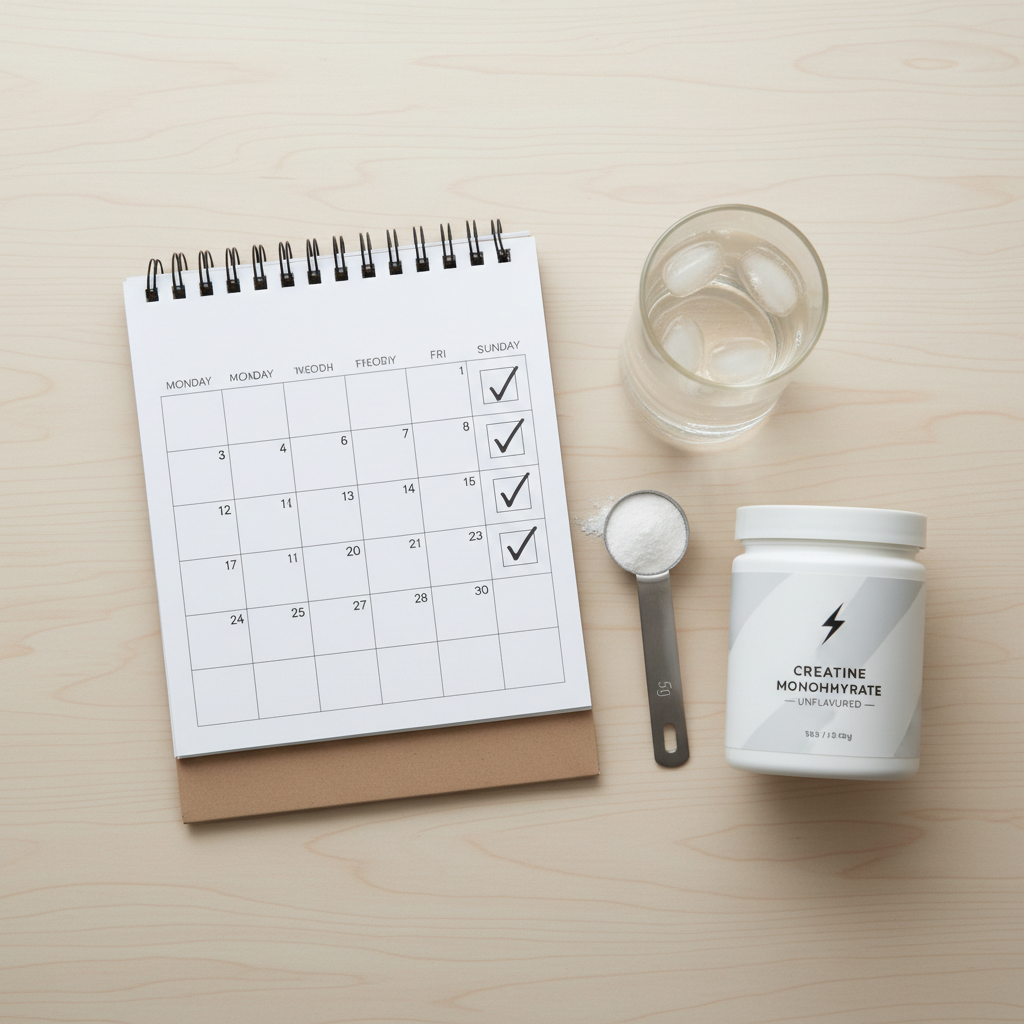
Key takeaways for beginners:
- 3–5 g daily is a practical starting point for many adults.
- Loading is optional, not mandatory.
- Take it at the time you can sustain for months, not a week.
Self-check: are you using creatine in a way that can actually work?
Before you switch brands or add more supplements, run this quick check. Most “creatine didn’t work” stories come from inconsistent use, poor training structure, or expecting scale weight to behave nicely.
- Consistency: have you taken it most days for 3–4 weeks?
- Training signal: are you progressively adding reps, sets, load, or improving technique?
- Protein and calories: are you getting “enough” for your goal, at least most days?
- Hydration: are headaches/cramps more about low fluid or electrolytes?
- Expectations: are you judging results by the scale only, instead of gym performance?
If you check most boxes and still feel nothing, that can happen. Response varies by person, baseline diet, and training style. The more explosive work you do, the more obvious the benefit tends to feel.
Side effects, safety, and common misconceptions
Most people tolerate creatine well, but “normal” effects can still surprise beginners.
What can happen
- Water weight: you may see a small weight increase early on from water stored in muscle, not body fat.
- GI discomfort: more likely with large single doses; splitting doses and taking with food often helps.
- Thirst: some people feel they need more fluids, especially during the first couple weeks.
Misconceptions worth dropping
- “Creatine is a steroid”: it’s not. It’s a naturally occurring compound found in food and made in the body.
- “It damages kidneys for everyone”: in healthy adults, research often finds creatine is safe when used as directed, but people with kidney conditions should be cautious and get medical guidance.
- “You must cycle it”: many people use it continuously, though individual comfort and clinician advice matter.
According to the National Institutes of Health Office of Dietary Supplements (NIH ODS), dietary supplements can affect people differently and may interact with medications, so it’s smart to review your full situation with a qualified health professional if you’re unsure.
Practical routines: how to fit creatine into real life
Here are three beginner-friendly setups that keep the habit easy.
Option A: “No thinking” daily routine
- Take 5 g creatine monohydrate with breakfast.
- Keep the tub next to something you already use daily, like your coffee or protein powder.
Option B: Training-day anchor
- Take 3–5 g right after training in water or a shake.
- On rest days, take the same dose with a meal, earlier in the day so you don’t forget.
Option C: Sensitive stomach approach
- Split 5 g into 2–3 smaller servings across the day.
- Avoid taking it on an empty stomach if that’s when symptoms show up.
If you want to track impact, watch your performance trend for a month: reps at a given weight, how many hard sets you can keep “clean,” or sprint repeat quality. Those signals usually tell you more than a scale does.
When to talk to a professional
If anything feels off, it’s fine to be cautious. Creatine is common, but your health context is personal.
- You have kidney disease, diabetes with kidney concerns, or a history of abnormal kidney labs.
- You take prescription meds with kidney considerations, or you’re not sure whether yours qualify.
- You get persistent GI issues, swelling, or symptoms you can’t easily explain.
- You’re an athlete subject to drug testing and need a supplement safety review.
A primary care clinician or a registered dietitian can help you decide whether creatine fits, and what monitoring makes sense, especially if you already do routine labs.
Conclusion: the beginner-friendly way to use creatine
Creatine works best when you treat it like a boring daily habit, not a “hack.” Pick creatine monohydrate, take 3–5 grams consistently, stay hydrated, and judge success by training quality over several weeks rather than day-to-day scale changes.
If you want a clean starting point, choose a simple monohydrate powder, set a daily reminder, and give it a month alongside a basic progressive program. That’s usually enough to see whether it’s a good fit for you.
FAQ
How long does it take to notice results from a Creatine Guide approach?
Many people notice changes in gym performance within 2–4 weeks, though it varies. If you’re not consistent or your training plan has no progression, it can be harder to feel any difference.
Do I need a loading phase as a beginner?
No. Loading can speed up saturation, but a steady 3–5 g daily approach is simpler and often easier on your stomach. Over months, both approaches can land you in a similar place.
Will creatine make me gain fat or look “puffy”?
Creatine may increase water stored in muscle, which can bump scale weight early on. That’s not the same as fat gain, but if you’re sensitive to weight fluctuations, it helps to track strength and measurements too.
Is creatine safe to take every day?
For healthy adults, creatine monohydrate is commonly used daily, and many studies support its safety when taken as directed. If you have kidney concerns or take relevant medications, it’s wise to check with a clinician.
Should I take creatine before or after workouts?
Timing tends to matter less than consistency. If taking it post-workout helps you remember, do that; if breakfast is easier, do that instead.
Can women take creatine?
Yes, many women use creatine for strength, power, and training support. Dosing is typically similar, though individual tolerance and goals still guide the choice.
What’s the best thing to mix creatine with?
Water works, a shake works, and taking it with a meal can help if you get stomach discomfort. The “best” mix is the one you’ll actually stick with consistently.
If you’re using this Creatine Guide as a starting point and you’d rather not guess, consider bringing your training goal, diet pattern, and any health context to a qualified coach or registered dietitian, they can help you pick a simple protocol and avoid the common beginner detours.