At-Home Low Impact Cardio Workouts That Actually Feel Like Cardio
Low impact cardio at home works when your joints need a break but your heart still needs a challenge, think “no pounding,” not “no effort.” If running hurts your knees, jumping spikes your pelvic floor symptoms, or you just live in an apartment where thumping is a problem, you can still get a real cardio session without leaving your living room.
This topic matters because a lot of people quit cardio for the wrong reason, they assume the only “real” option involves jumping, sprinting, or long treadmill miles. In real life, consistency beats intensity you can’t repeat, and low impact sessions are often the difference between “I did it again today” and “I’ll start next week.”
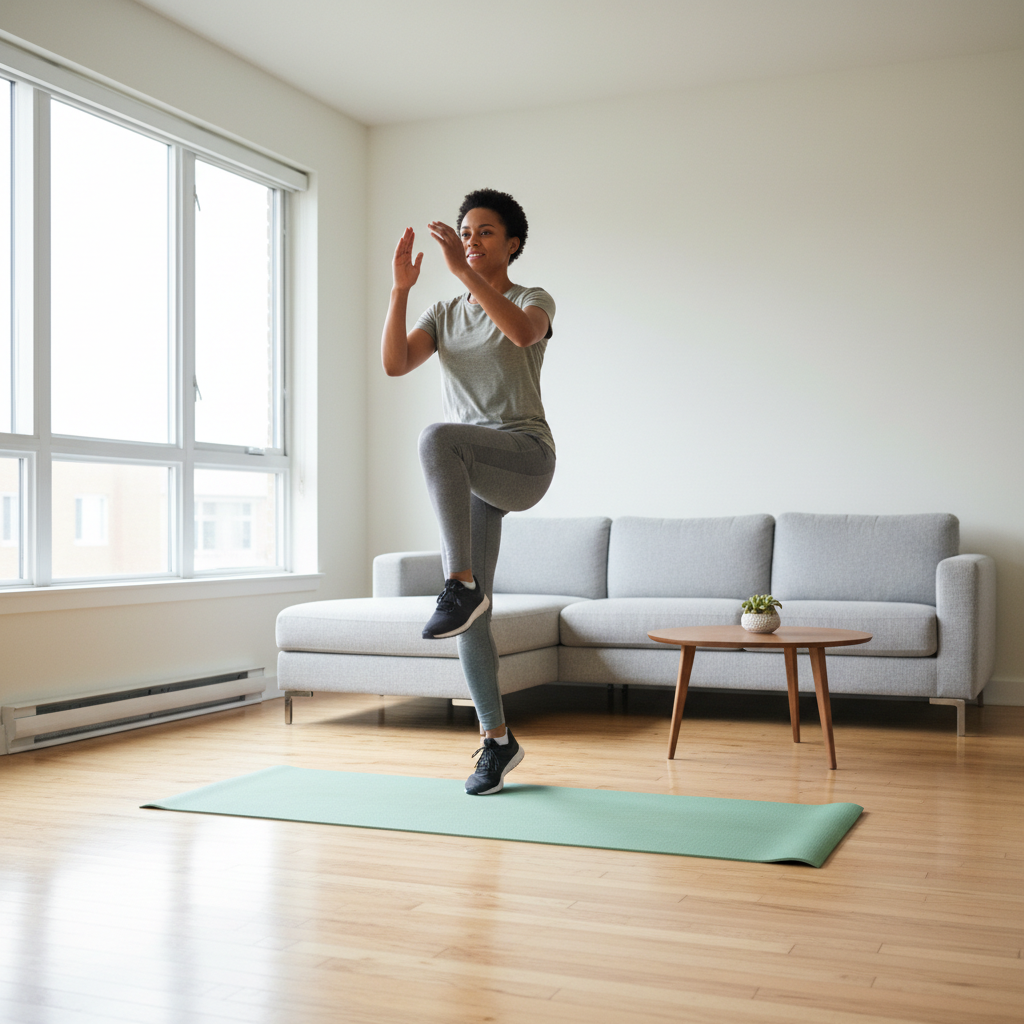
Below you’ll get practical workout options, a quick self-check to pick the right intensity, and a simple weekly plan you can repeat. No hype, just the stuff that tends to make home cardio stick.
What “Low Impact” Really Means (and Why It Still Builds Fitness)
Low impact usually means at least one foot stays on the floor, so you reduce joint loading and repetitive pounding. It does not mean you can’t sweat, you can raise intensity with tempo, range of motion, arms, and shorter rest.
According to the American Heart Association, moderate-intensity aerobic activity is a key part of heart health, and you can reach that intensity through many movement styles, not just running. Translation: your heart responds to effort, not impact.
People often get tripped up here: if you do a slow march while scrolling your phone, that’s movement but not much training. If you do a crisp march with big arm drives, controlled breathing, and intentional pace, it can feel surprisingly “cardio.”
Why Low Impact Cardio at Home Might Not Be Working (Common Real-World Causes)
If you’ve tried at-home sessions and felt like nothing changed, it’s usually one of these issues, not a lack of willpower.
- Intensity stays too low: pace never rises, arms stay passive, rest drifts longer and longer.
- Same routine every time: your body adapts quickly to one pattern.
- Too many “mini breaks”: checking texts, adjusting playlists, long water breaks, it adds up.
- Form limits output: short steps, stiff ankles/hips, slumped posture can cap effort.
- Recovery mismatch: going hard daily, then feeling wiped and skipping days.
One more subtle one: if you’re already active (lots of steps at work, kids, errands), you may need either longer sessions or slightly higher effort for your body to notice a training signal.
Quick Self-Check: Choose the Right Intensity Today
Before you press play on a workout, take 30 seconds to pick a lane. This prevents the common swing between “too easy” and “I overdid it.”
The talk test (simple and reliable)
- Easy: you can sing. Use for recovery days or soreness.
- Moderate: you can talk in short sentences, but you don’t want to. Most sessions live here.
- Vigorous: a few words at a time. Use sparingly, and consider joint tolerance.
Red flags to scale down
- Sharp pain, new swelling, numbness, or dizziness
- Pelvic heaviness/leaking that worsens during the session
- Foot, ankle, knee, or hip pain that changes your gait
If any red flags show up, it often makes sense to stop and consider a clinician or physical therapist, especially when symptoms repeat.
Best Low Impact Cardio Moves (No Equipment) + How to Progress
These are staples because they scale well in a small space. Mix them into circuits and adjust the “dials” to keep the effort honest.
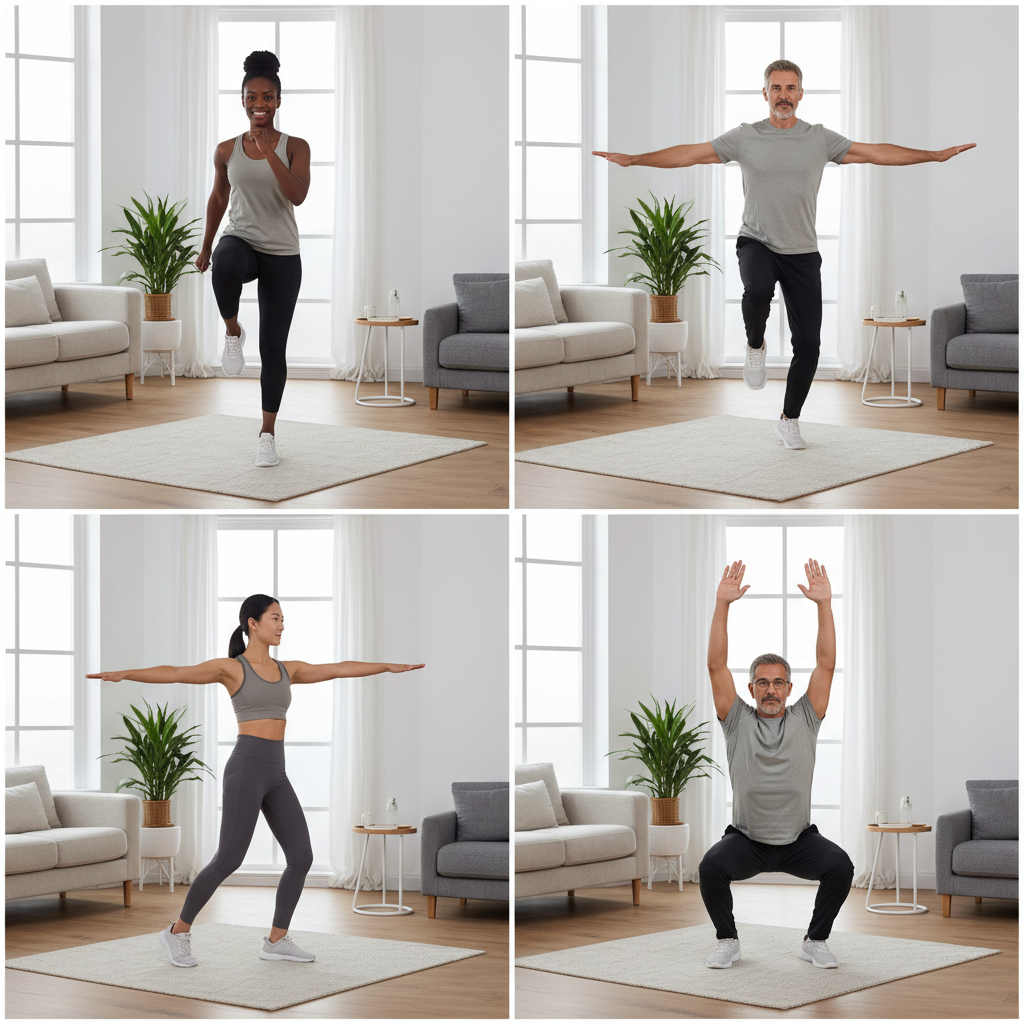
- Power march: drive elbows back, lift knees to comfortable height, stay tall.
- Step jacks: step out-in while arms go overhead, keep core braced, no hop.
- Lateral step + reach: step side-to-side with big arm sweeps, great for raising heart rate fast.
- Low-impact mountain climber (hands elevated): hands on couch or sturdy table, alternate knees in.
- Fast feet (no jump): tiny quick steps in place, think “quiet feet.”
- Squat to stand + reach: sit back, stand and reach, keeps it cardio while training legs.
Progression dials that usually work at home: increase arm involvement, increase pace for 20–40 seconds, add a small knee lift, reduce rest by 10–15 seconds, or add one extra round. You don’t need to jump to make it hard.
Sample Workouts (15, 25, and 35 Minutes)
Pick one based on your day, not your ego. If you’re consistent, the “short” workout often beats the perfect plan you never repeat.
15-minute steady session (beginner-friendly)
- 2 minutes easy march + shoulder rolls
- 8 minutes continuous circuit: power march → step jacks → lateral step + reach (rotate every 45–60 seconds)
- 3 minutes brisk walk-in-place cooldown
- 2 minutes light stretching (calves, hips, chest)
25-minute interval session (most people’s sweet spot)
- 5 minutes warmup (march, side steps, easy squats)
- 14 minutes intervals: 40 seconds work / 20 seconds easy march, rotate 4 moves
- 4 minutes “moderate cruise” (keep moving, no full stops)
- 2 minutes cooldown breathing + mobility
35-minute endurance builder (low impact, higher volume)
- 6 minutes warmup
- 24 minutes ladder: 2 minutes moderate / 1 minute easy, repeat 8 rounds with varied moves
- 5 minutes cooldown
A Simple Weekly Plan (and a Table to Make It Obvious)
If you want results without overthinking, plan frequency first, then sprinkle intensity. According to the U.S. Department of Health and Human Services, adults benefit from regular aerobic activity across the week, with intensity adjusted to capacity and goals.
Here’s a realistic template that many people can recover from, adjust up or down based on your joints, sleep, and schedule.
| Day | Session | Goal | Effort Target |
|---|---|---|---|
| Mon | 25-min interval | Cardio stimulus | Moderate with short hard bursts |
| Tue | 15–20 min easy | Recovery + habit | Easy |
| Wed | Strength (optional) or 25 min steady | Support joints, improve output | Easy–moderate |
| Thu | Off or mobility | Recover | Very easy |
| Fri | 35-min endurance | Build base | Moderate |
| Sat | 15-min “mini” session | Consistency | Easy–moderate |
| Sun | Walk, gentle cycle, or off | Enjoyable movement | Easy |
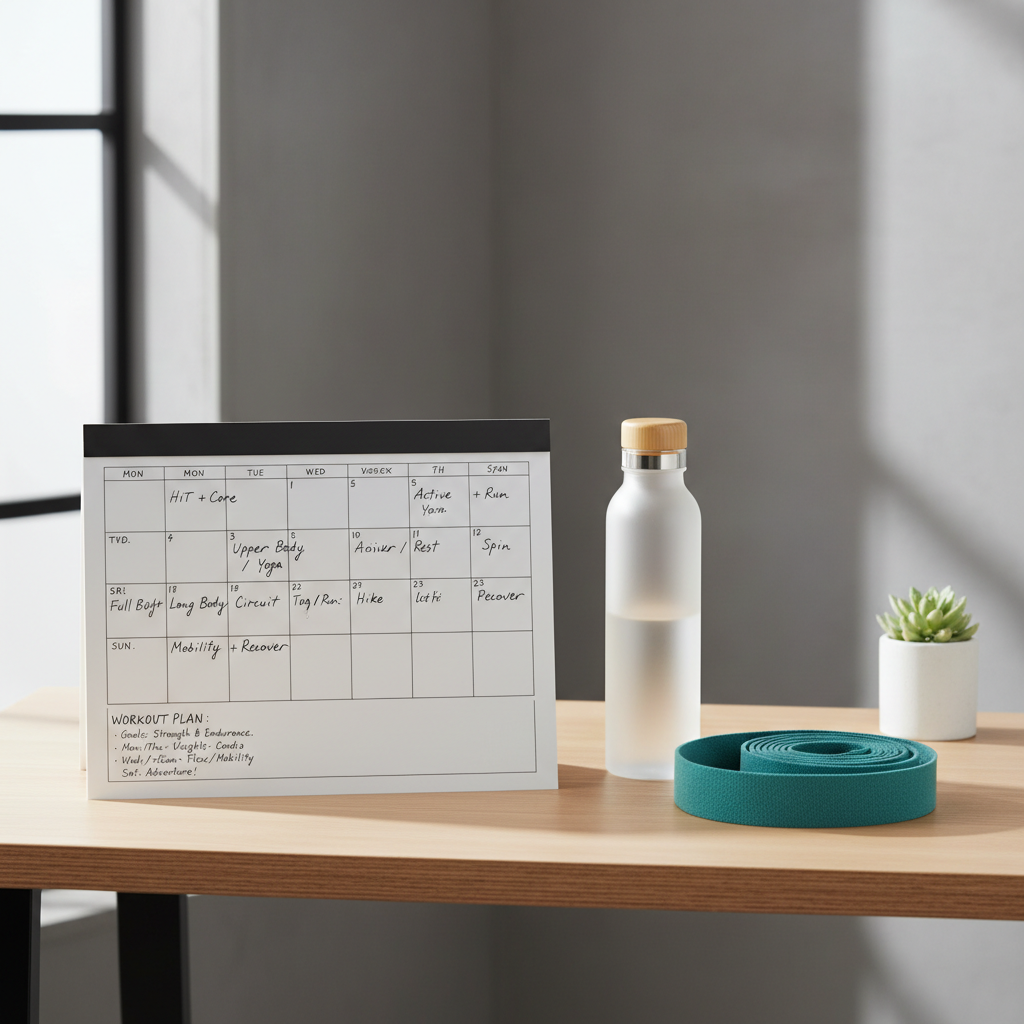
If you prefer fewer days, keep two moderate sessions and one longer easy session, that combination tends to cover both “fitness” and “sustainability.”
Form and Setup Tips That Make Home Cardio Safer (and Harder)
Small tweaks matter more at home because you don’t have a coach, and you often train on forgiving carpet or slippery hardwood.
- Footwear: on hardwood, supportive sneakers can reduce slipping; on thick carpet, stability might feel better in flatter shoes. If you have foot issues, a podiatrist might guide you better than generic advice.
- Posture: ribs stacked over pelvis, shoulders relaxed, eyes forward, this lets your hips and glutes do the work.
- Quiet landings: even without jumps, think “soft steps.” Noise often equals unnecessary impact.
- Arm drive: arms are your secret weapon for intensity without pounding.
- Space check: one step in each direction, no rugs curling up, nothing you can clip with an elbow.
Key point: if your knees cave in or your low back takes over, slow down and shrink the range of motion, then build back up. Faster is not always “more cardio” if your mechanics collapse.
Common Mistakes (and What to Do Instead)
- Mistake: Doing random videos with no plan. Try: choose 2–3 repeatable workouts, track rounds or interval pace.
- Mistake: “All sweaty is good” every day. Try: alternate harder and easier days so you can show up again.
- Mistake: Skipping warmups. Try: 4–6 minutes of ramp-up movement, your joints usually feel the difference.
- Mistake: Going too low impact by removing leg work. Try: include squat-to-stand or step patterns so legs actually train.
When to Get Professional Help
Low impact cardio at home is generally a solid option, but some situations deserve extra support. Consider checking with a healthcare professional if you have chest pain, fainting, uncontrolled blood pressure, new or worsening joint swelling, or symptoms that don’t settle within a day or two after exercise.
If you’re postpartum, dealing with pelvic floor symptoms, or managing chronic joint pain, a physical therapist can often help you find the right progressions and breathing strategies so cardio feels better instead of riskier.
Conclusion: Make It Low Impact, Not Low Effort
Low impact cardio at home can be legitimately challenging when you treat it like training: pick moves that scale, hold yourself to an effort target, and follow a weekly rhythm your body can recover from. If you want one simple next step, choose the 25-minute interval workout twice this week, then add one longer moderate session on the weekend and see how your energy and joints respond.
If you need a little structure, write your plan on a sticky note, pick your four go-to moves, and keep rest honest, that alone tends to separate “I tried” from “this is working.”
FAQ
What counts as low impact cardio at home if I can’t jump?
Marching variations, step jacks, lateral steps, hands-elevated climbers, and squat-to-stand patterns all qualify. The impact stays low, and you can still raise heart rate with pace and arm drive.
How do I know if my at-home cardio is intense enough?
Use the talk test: you should be able to speak in short sentences but not comfortably chat the whole time during the main sets. If you can sing, it’s probably a recovery pace.
Can low impact cardio help with weight loss?
It can contribute, especially because it’s easier to repeat without getting beat up. Results still depend on overall activity, nutrition, sleep, and consistency, so think of it as one piece of the puzzle.
Is walking in place actually effective?
It can be, but most people do it too gently. Add purposeful arm swings, knee lift within comfort, and timed intervals to make it a workout rather than background movement.
How many days per week should I do low impact cardio?
Many people do well with 3–5 days, mixing moderate sessions with easier days. If you’re sore, stressed, or not sleeping, fewer higher-quality sessions often beat daily grind.
What if I have knee pain during these workouts?
Scale range of motion, slow the pace, and prioritize hip-driven steps over knee-dominant bending. If pain is sharp, worsening, or changes how you walk, it’s smart to pause and talk with a professional.
Do I need equipment for low impact cardio at home?
No, but optional tools like a step platform, light dumbbells, or a stationary bike can add variety. Start without gear so you learn what intensity feels like first.
If you’re trying to make low impact cardio at home feel more structured without turning it into a full-time project, a simple done-for-you weekly calendar and a short list of repeatable routines can make consistency much easier to pull off.