
Small Space Fitness works when you stop trying to copy a full gym setup and start designing for what your room can realistically handle: quick transitions, low noise, and gear that stores fast. If you live in a studio, share a living room, or just hate dragging equipment out, this guide focuses on setups and routines that fit real life, not influencer footage.
It matters because consistency is usually the limiting factor, not motivation. When your workout space takes 15 minutes to build and another 15 to put away, you end up skipping it on busy days, then momentum disappears.
We’ll walk through practical layouts, space-smart equipment, and simple programming you can repeat. No miracles, just a system that makes working out the easiest option in a small home.
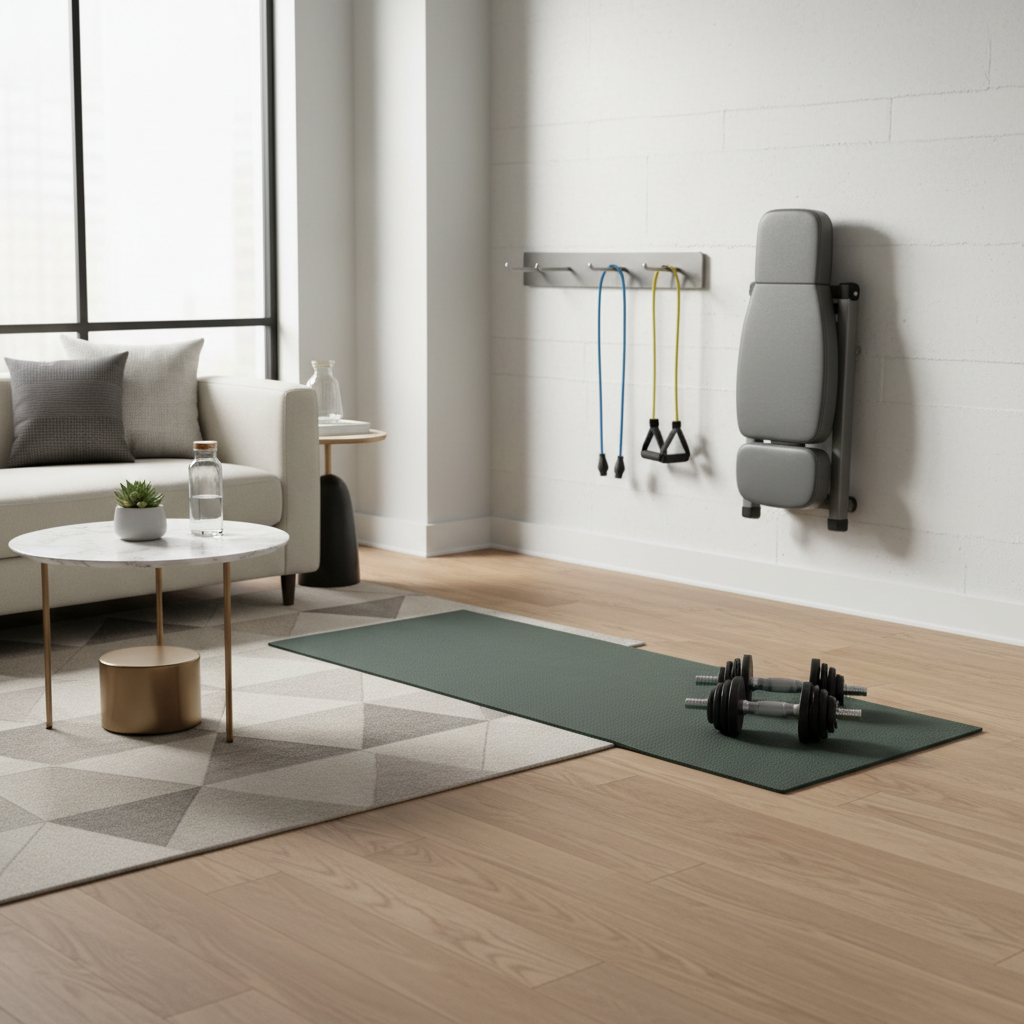
Why small spaces make fitness feel harder than it is
In tight homes, the challenge rarely comes from the workout itself. It comes from friction—the small annoyances that add up.
- No dedicated zone, so every session feels like rearranging your home.
- Visual clutter makes it easier to procrastinate and harder to focus.
- Noise and impact concerns (downstairs neighbors, thin walls) limit jumping or dropping weights.
- All-or-nothing thinking: people assume if they can’t do a full routine, it’s not worth doing.
According to CDC guidance on physical activity, adults generally benefit from a mix of aerobic activity and muscle-strengthening work across the week. The good news is you can cover a lot of that with short, repeatable sessions that don’t require much floor space.
Pick your micro-workout zone (without redesigning your apartment)
Small Space Fitness gets dramatically easier once you claim a “micro-zone”, even if it’s only the size of a yoga mat. The trick is choosing a spot that minimizes setup and conflict with normal living.
Three micro-zone options that usually work
- Wall zone: 2–3 feet from a wall for push-ups, wall sits, and band anchors.
- Rug swap: roll a mat over an existing rug area, then store it vertically.
- Doorframe zone: near a sturdy door for pull-up bar options (if safe and rated).
Quick measurement check
- Can you lie down fully with arms overhead without hitting furniture?
- Can you hinge (hip-bend) with a backpack or dumbbells without smacking a table?
- Can you open the door fully and move through the room safely?
If you answer “no” to most of these, don’t force it. Choose more standing-based work and use split-stance movements that need less depth.
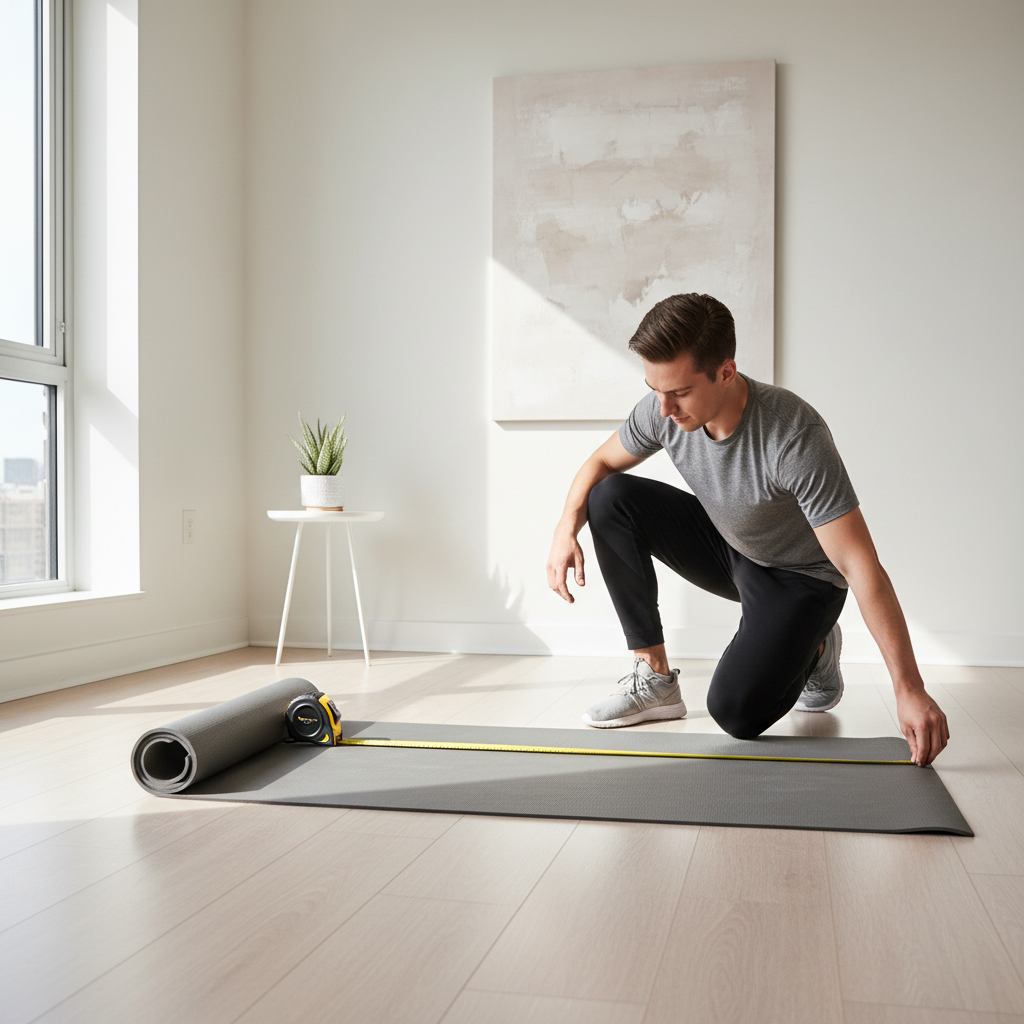
Space-smart equipment: what’s worth it (and what usually isn’t)
You don’t need much, but you do need the right type. Prioritize equipment that handles multiple movements and stores in seconds.
A practical equipment ladder
- Tier 1 (almost zero space): resistance bands, a jump rope (if impact/noise works), a yoga mat.
- Tier 2 (high value per inch): adjustable dumbbells or a compact kettlebell, a door anchor for bands.
- Tier 3 (only if you’ll truly use it): foldable bench, suspension trainer, compact step platform.
What tends to disappoint in small homes: bulky cardio machines that become expensive coat racks, large barbell setups without safe flooring, and anything that requires constant assembly.
Equipment decision rule
If it doesn’t store in under 60 seconds, it often won’t get used consistently. That sounds harsh, but it matches what most people experience when space is tight.
A simple weekly plan that fits small space living
The best plan is the one you repeat. For most people, that means short sessions you can do even when the apartment is messy and your schedule is not ideal.
Sample week (20–30 minutes per session)
- Day 1 – Strength A: squat pattern, push, row, core
- Day 2 – Low-impact cardio: brisk walk, incline walk, or step-ups
- Day 3 – Strength B: hinge pattern, overhead press, pull, core
- Day 4 – Mobility + easy conditioning: mobility flow plus light intervals
If you only manage 2 days some weeks, keep the two strength days. That usually preserves progress better than random workouts.
Key points to keep you progressing
- Progression: add reps, add sets, or add a small amount of load over time.
- Balance: include both push and pull patterns to support shoulders and posture.
- Noise control: choose controlled tempos, step-back lunges, and mat-based options.
Do-anywhere movement menu (quiet, compact, effective)
When you don’t have room to move around, you lean on “in-place” movements. This is where Small Space Fitness really shines, because you can get a full-body session with a footprint smaller than a bath towel.
Strength staples
- Lower body: goblet squat, split squat, glute bridge, Romanian deadlift (dumbbells/backpack)
- Upper body push: incline push-up, floor press, overhead press (light-to-moderate load)
- Upper body pull: one-arm row, band row, face pull with bands
- Core: dead bug, plank variations, suitcase carry (walk a short line back and forth)
Cardio without the stomping
- Marching intervals with high knees (controlled)
- Step-ups on a stable step or sturdy platform
- Shadow boxing with light hand weights (optional)
If you have joint pain or a prior injury, keep intensity conservative and consider asking a qualified coach or clinician for modifications that match your situation.
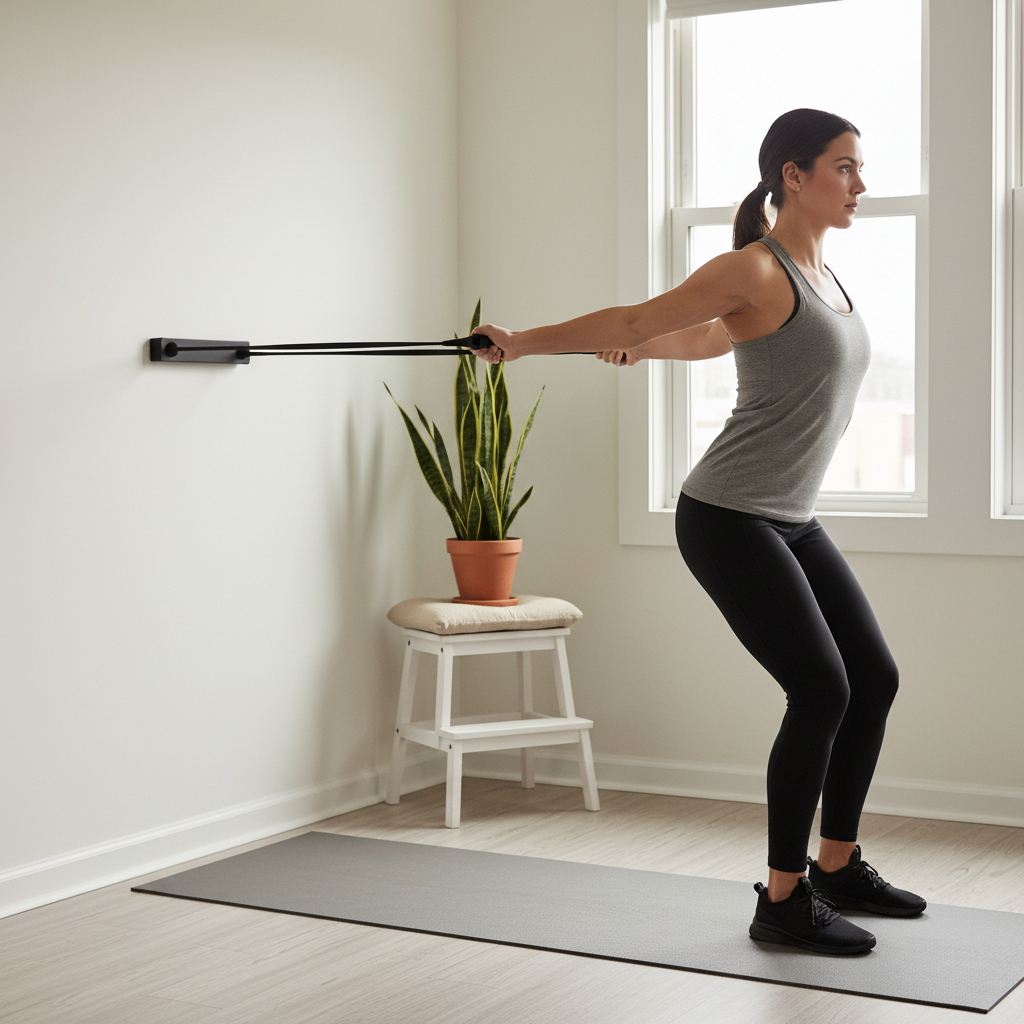
Practical setup: storage, flooring, and neighbor-friendly tweaks
This is the unglamorous part, but it keeps you consistent.
Storage that doesn’t look like a gym exploded
- Vertical storage: a slim corner rack, wall hooks for bands, mat stored upright.
- One bin rule: one dedicated bin or basket for small items, if it overflows, something goes.
- Visible but tidy: gear you use weekly can stay accessible, gear you avoid should disappear or get sold.
Flooring and noise basics
- Use a thicker mat or interlocking foam tiles if you train with weights.
- Avoid dropping equipment, even small dumbbells, especially on upper floors.
- Choose slower eccentrics, meaning the lowering phase, to reduce impact and improve control.
Quick self-check: what kind of small-space exerciser are you?
This section sounds fluffy, but it’s useful. Your setup should match your behavior, not your aspirations.
- “I need it to be fast”: choose bands + adjustable dumbbells, 15–20 minute sessions, minimal transitions.
- “I get bored”: keep a movement menu and rotate variations weekly without changing the whole plan.
- “I need quiet”: prioritize controlled strength work, step-ups, carries, and mobility-based finishers.
- “I share space”: pick a portable kit that fits in one bin, schedule shorter sessions more often.
Equipment comparison table (small space reality check)
If you’re deciding what to buy, this is a grounded way to compare options beyond hype.
| Option | Space Needed | Best For | Watch Outs |
|---|---|---|---|
| Resistance bands + door anchor | Very low | Full-body strength, travel-friendly workouts | Door safety, band wear/tear, learning tension levels |
| Adjustable dumbbells | Low | Progressive strength training at home | Higher upfront cost, set-change time between exercises |
| Kettlebell (single or pair) | Low | Hinges, squats, conditioning circuits | Form matters for swings, may not suit all backs |
| Foldable bench | Medium | Pressing variety, split squats, step-ups | Stability and weight rating, storage still required |
| Treadmill | High | Low-impact cardio at home | Noise, maintenance, becomes a permanent fixture |
Common mistakes that stall progress in small spaces
A lot of people don’t fail because they’re lazy, they fail because the plan fights the environment.
- Buying too much too soon, then spending more time managing gear than training.
- Chasing sweat only: conditioning is great, but muscle-strengthening work tends to deliver better long-term payoff.
- Ignoring recovery: doing high-intensity circuits daily in a small space can beat up joints fast.
- Skipping pulling movements: lots of push-ups, not enough rows, then shoulders start complaining.
According to American Council on Exercise (ACE), good exercise technique and appropriate progression help reduce injury risk. If you’re unsure about form, it’s reasonable to start lighter, move slower, or ask a qualified trainer for a quick check.
Conclusion: make it easy to start, and you’ll actually do it
Small Space Fitness doesn’t require a bigger apartment, it requires less friction. Claim a micro-zone, keep gear minimal, pick a repeatable plan, and make storage effortless so starting a workout feels almost automatic.
If you want a simple next step, choose one strength session you can finish in 20 minutes, schedule it twice this week, and set up your space tonight so tomorrow’s you has fewer decisions to make.
FAQ
What is the minimum space needed for Small Space Fitness?
Many people can train effectively in a yoga-mat footprint. If you can lie down fully and do a hip hinge safely, you can cover most strength basics with smart exercise choices.
Is it okay to do cardio in an apartment without disturbing neighbors?
Often yes, but it depends on building construction and time of day. Low-impact options like step-ups, marching intervals, and controlled shadow boxing tend to be more neighbor-friendly than jumping.
What equipment should I buy first for a small home workout?
Bands and a mat usually offer the best value and storage. If you want strength progression, adjustable dumbbells often make sense next, assuming you can store them safely.
How often should I strength train in a small space?
For many adults, 2–3 strength sessions per week is a realistic starting point. The bigger win is repeating the same plan long enough to progress, rather than constantly changing workouts.
Can I build muscle with resistance bands only?
In many cases, yes, especially for beginners and for higher-rep hypertrophy work. You may eventually want heavier loading for legs and certain pulls, but bands can take you far when used well.
What if I have knee or back pain?
Modify aggressively and keep ranges of motion comfortable. Pain can have many causes, so if symptoms persist or worsen, consider consulting a qualified healthcare professional or physical therapist.
How do I stay consistent when my workout space is also my living room?
Reduce setup time: keep a single bin of gear, store the mat where you can grab it in seconds, and use a short routine you can start even when the room isn’t perfectly clean.
If you’re trying to make Small Space Fitness stick, a simple reset helps: pick one corner, pick one small kit, and commit to a repeatable 2–3 day plan for four weeks. If you want a more hands-off approach, consider getting a trainer to build a quiet, apartment-friendly program around your space, schedule, and any limitations.